CHARACTERS
Philip Marlowe was not the only star. Chandler’s novels are populated by a gallery of femme fatales, corrupt officials, thugs and drunks: the cast of a morally suspect mid-century Los Angeles.
PHILIP MARLOWE
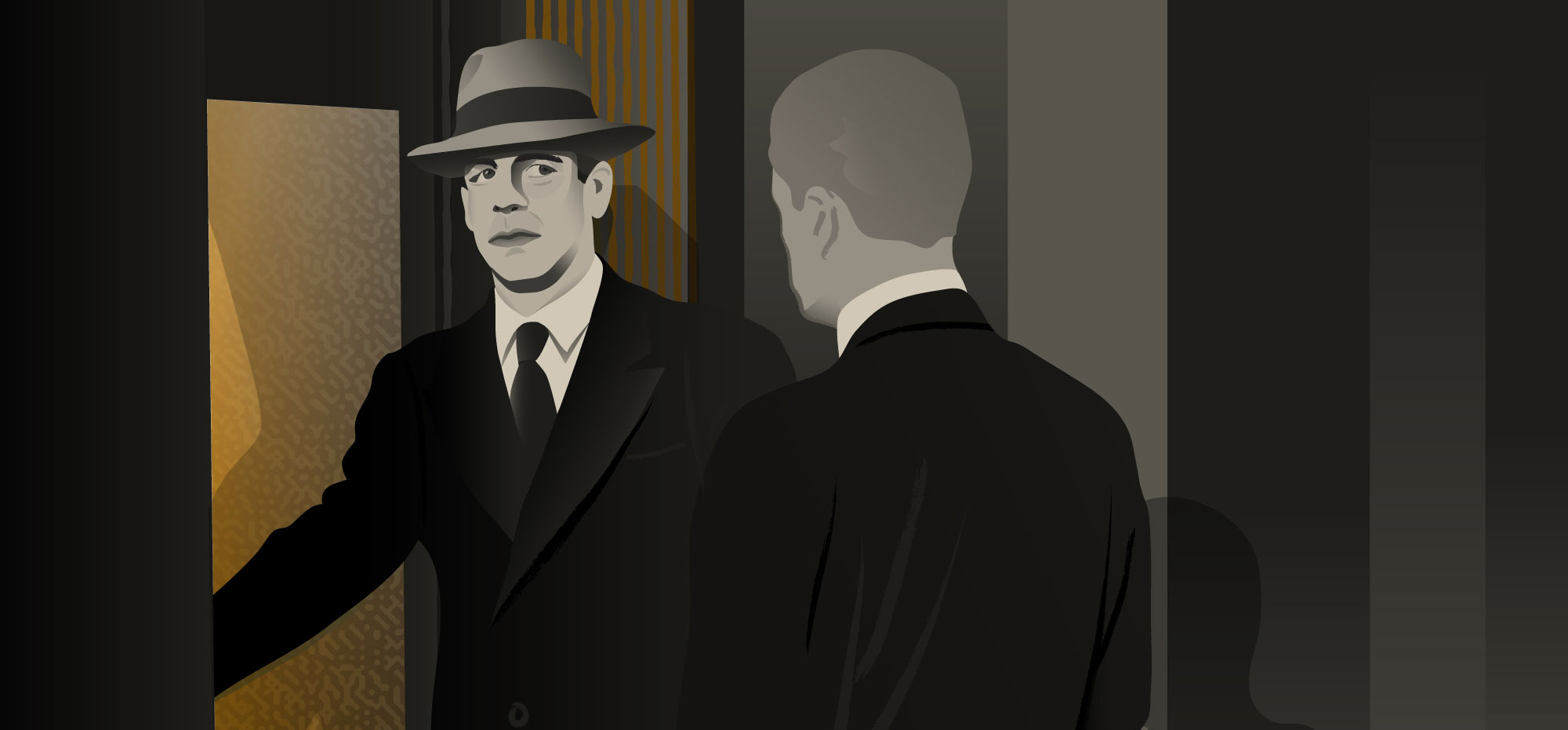
“I needed a drink, I needed a lot of life insurance, I needed a vacation, I needed a home in the country. What I had was a coat, a hat and a gun. I put them on and went out of the room.” That was Marlowe in Farewell, My Lovely.
The original private investigator whose internal dialogue becomes the vernacular of Los Angeles, he’s a modern-day chivalric knight in a creased suit, playing chess, drinking brandy, and making wisecracks.
He worked for the District Attorney but was fired for insubordination. He’s an individualist who lives by his own code of honor. But at his heart, Marlowe is lonely – his faith in the world is challenged by the dark environments through which he moves. He is a study in what it is to be a man.
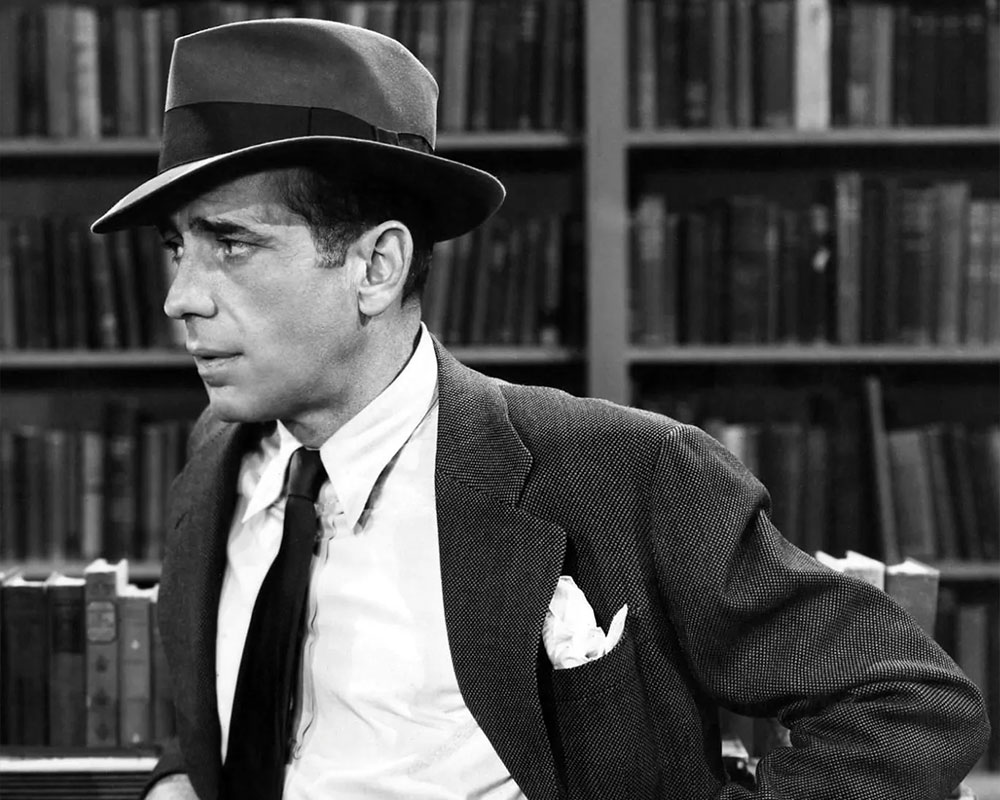
Humphrey Bogart as Phillip Marlowe The Big Sleep (1946) Directed by Howard Hawks, produced by Warner Bros.
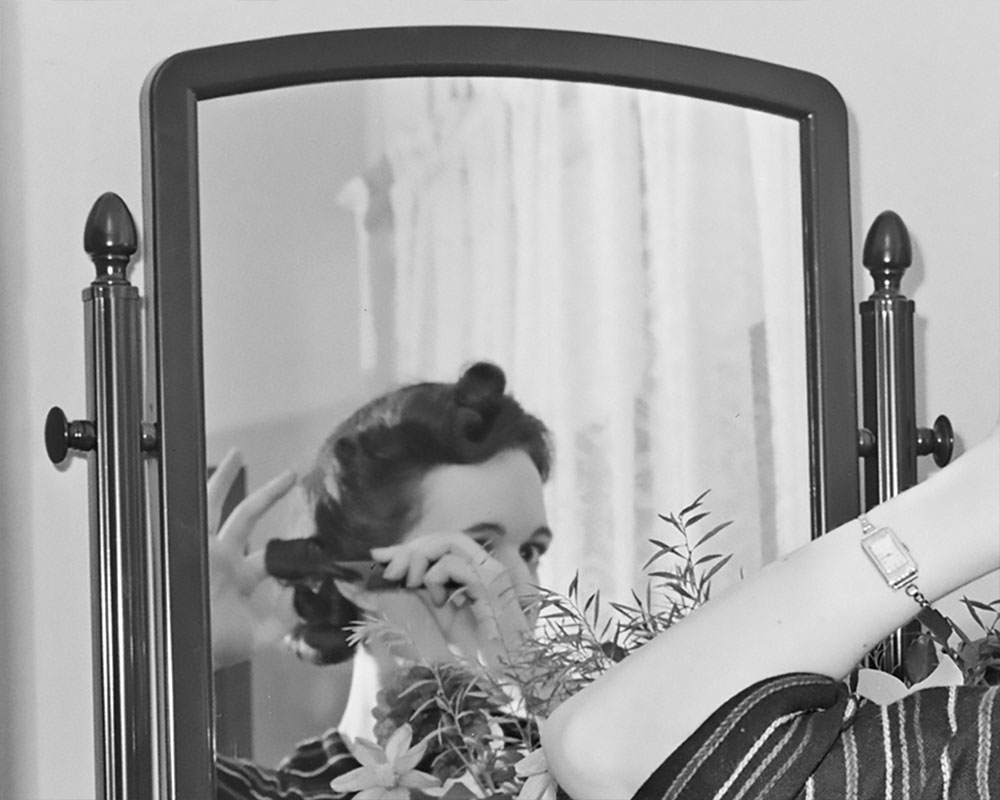
Anne Riordan. Photographer: Russell Lee.
ANNE RIORDAN
Anne Riordan possesses a face “fine drawn like a Cremona violin,” yet Marlowe damns her with faint praise. He catalogs her imperfections -a forehead too high, a mouth too wide – labeling her “pretty, but not so pretty” that she requires protection.
It is Anne Riordan, a freelance writer and an orphan, who finds the body of Lindsay Marriott in Farewell, My Lovely. She helps gather information on Helen Grayle’s jade necklace, essentially performing the role of Marlowe’s assistant throughout the novel.
However, compared to the lethal and intoxicating sensuality of the femme fatale Mrs. Grayle, Anne is a portrait of sweetness. She assists Marlowe and openly admires his resilience. He knows he should love her, but simply cannot.
BERNIE OHLS
Bernie Ohls is the world-weary chief investigator for the Los Angeles District Attorney and a series regular, appearing in The Big Sleep, The High Window, and The Long Goodbye. A former colleague of Marlowe’s, Ohls acts as the catalyst in The Big Sleep by referring him to General Sternwood, though he later grows frustrated by Marlowe’s interference in the Sylvia Lennox case.
Regularly found chewing an unlit cigarette while debating the rot of society, Ohls understands the city’s dark mechanics. In The Long Goodbye, he notes: “There ain’t no clean way to make a hundred million bucks… Big money is big power and big power gets used wrong. It’s the system”. Despite their friction, Marlowe offers the grudging compliment that Ohls is “decent… underneath”.
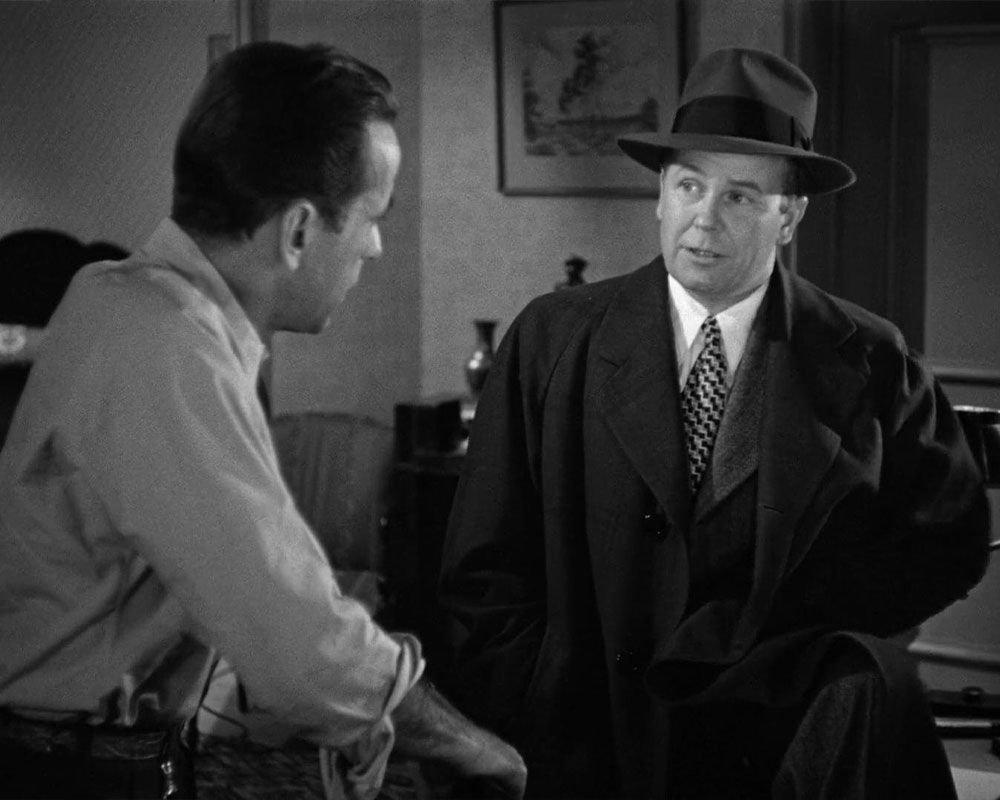
Regis Toomey as Chief Inspector Bernie Ohls in The Big Sleep (1946). Directed by Howard Hawks, produced by Warner Bros.
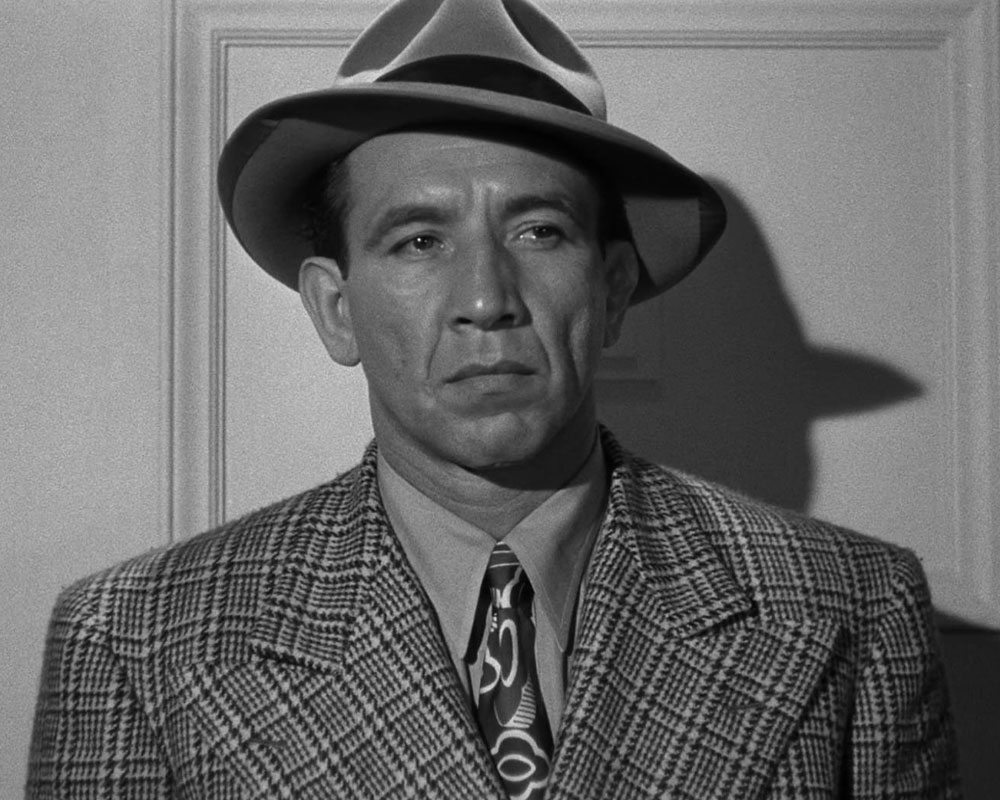
Mike Mazurki as Moose Malloy in Murder, My Sweet (1944) released as Farewell, My Lovely in the United Kingdom. Directed by Edward Dmytryk, produced by RKO Radio Pictures.
MOOSE MALLOY
Moose Malloy has just finished an eight-year stretch in San Quentin for a bank robbery when he walks onto the pages of Farewell, My Lovely. “He was a big man but not more than six feet five inches tall and not much narrower than a beer truck,” wrote Chandler, noting his penchant for loud, checked clothes and violence.
The first thing he does, once free, is go looking for his woman: Velma Valento, a redhead and singer at a nightclub that had closed down while he was inside. “The big lug loved her,” Marlowe observes.
Malloy is a simple man in a cynical Los Angeles of gangsters and double-crossers. He doesn’t realize that the world has moved on, or that even his Velma is no longer the woman he remembered. Love is the only compass Moose has. He is a monosyllabic tragedy.
RUSTY REGAN
“A big curly-headed Irishman from Clonmel, with sad eyes and a smile as wide as Wilshire Boulevard.” This is how they remembered Rusty Regan in The Big Sleep. He was an ex-bootlegger and a soldier of the IRA, married to the General’s daughter, Vivian. To the dying General Sternwood, he was more than a son-in-law. “He was the breath of life to me,” the old man tells Marlowe.
Rusty had disappeared without saying goodbye. He never walked onto a single page of the novel, but he becomes the metaphor for what is lost. In a house of spoiled daughters, Rusty was the man with blood in his veins. He was a kindred spirit to the General, a man of honor and loyalty. Marlowe is hired to find this ghost of virtue in a rain-soaked and lie-riddled Los Angeles.
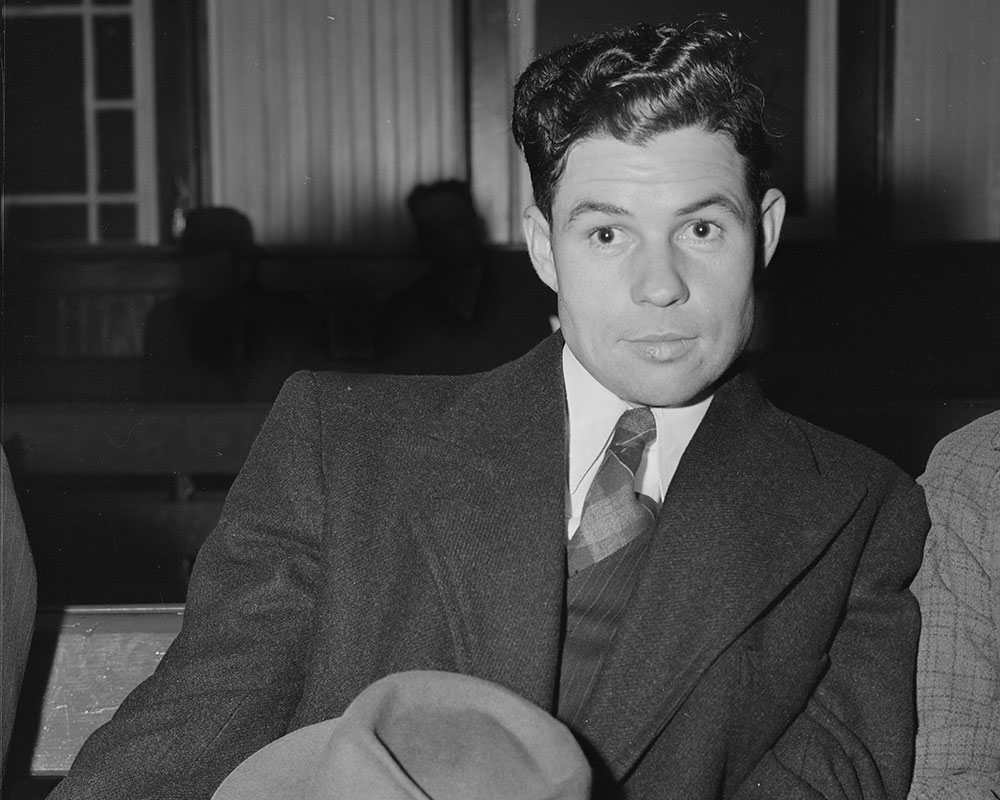
Photograph: John Vachon
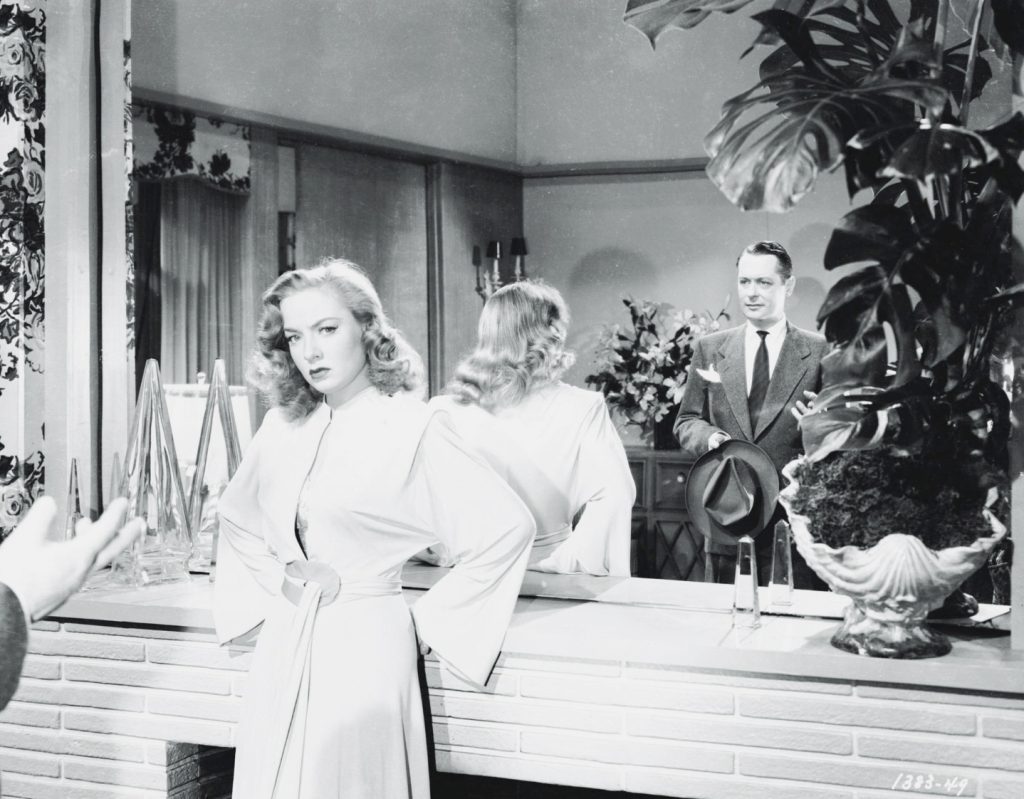
Audrey Totter as Adrienne Fromsett in Lady in the Lake (1946). Directed by Robert Montgomery, produced by Metro-Goldwyn-Mayer.
ADRIENNE FROMSETT
A smaller role in the original novel, by the time The Lady in the Lake
was made into a film in 1947, Adrienne Fromsett had been promoted. She
rose from being a clipped executive secretary in a perfume firm to an
editor in a pulp fiction publishing firm calling for more blood in the
writing. In both, she is a hard-edged woman more interested in a
promotion than a husband. She is the one who hires Marlowe on behalf
of her boss.
She does not betray her own secrets, and in her, Marlowe finds his
match. By the time she was elevated in the film and played by Audrey
Totter, Fromsett had become an icon of padded shoulders, with sharp
nails and sharp wit: a classic film noir minx.
LINDA LORING
Marlowe was investigating the death of his friend and drinking buddy Terry Lennox when he met Linda Loring. She was the daughter of a billionaire, trapped in an unhappy marriage, and her sister, Sylvia, had been Lennox’s wife. Though hardly perfect, she served as a moral foil to her sister, Sylvia, who was promiscuous and reckless.
Linda was one of the few characters who offered Marlowe a genuine opportunity to leave his life on the “mean streets.” Although she left for Paris at the end of The Long Goodbye, their parting provided the emotional weight for the novel’s title.
She remains unique in the Chandler canon as the only woman Marlowe eventually married, found in Chandler’s final, unfinished manuscript, Poodle Springs. Of Linda as a love interest, Chandler noted in his letters, “I hope I picked the right woman.”