
CHANDLER’S NOVELS ON SCREEN
Hollywood, the burgeoning industry in Los Angeles, loved Raymond Chandler. His novels were a natural fit for film noir: almost every one was adapted for the screen.
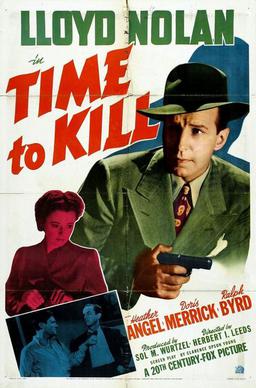
Time to Kill (1942)
Film / 20th Century Fox Studio / USA
Based on The High Window (loose adaptation)
Director: Herbert I. Leeds
Marlowe Actor: Lloyd Nolan
Principal Cast: Heather Angel; Doris Merrick; Ralph Byrd
Screenwriter: Kenneth Gamet
The first screen adaptation of The High Window arrived almost before the novel had left the shelves. Fox had bought the rights for $3,500 and handed it to their existing B-movie detective franchise. Philip Marlowe was replaced with Michael Shayne, a wisecracking private eye played by Lloyd Nolan, in pursuit of the thief of an antique coin. Running at 61 minutes, it is brisker and more cheerful than anything Chandler had in mind -he had no say in the production. Some critics argued it followed the novel’s plot more faithfully than the later, more serious Brasher Doubloon.
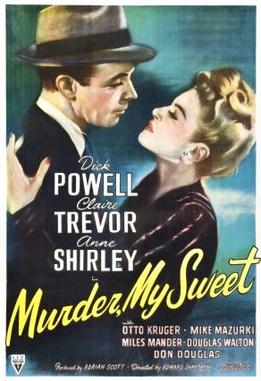
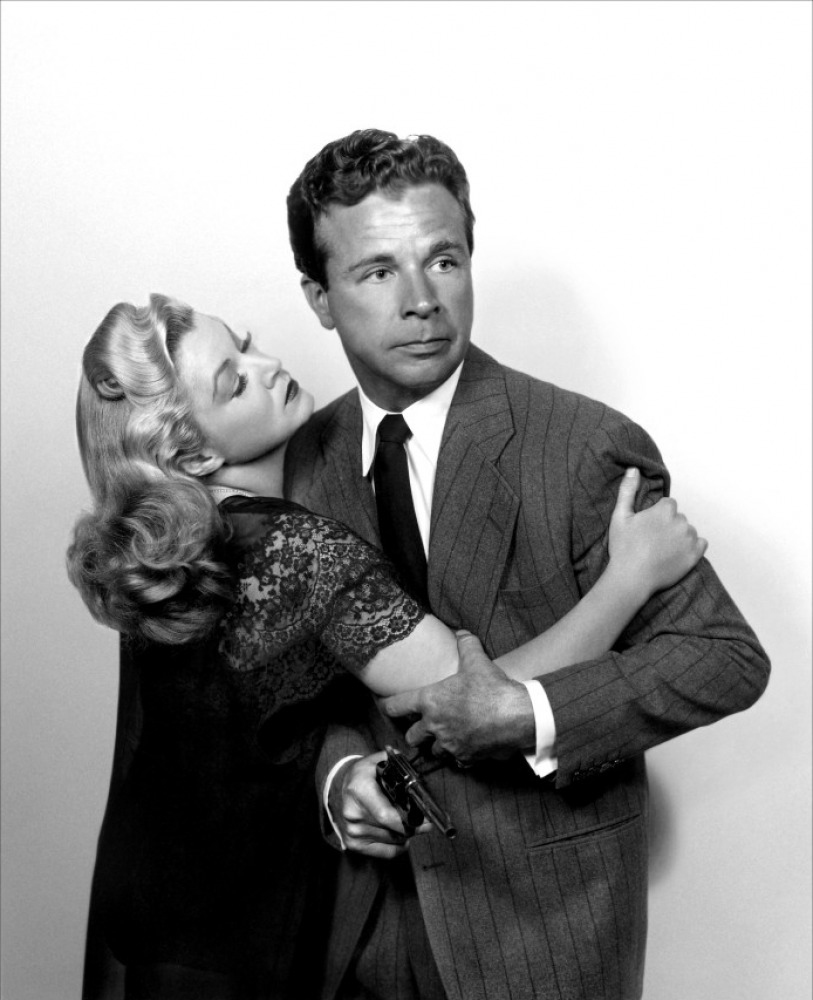
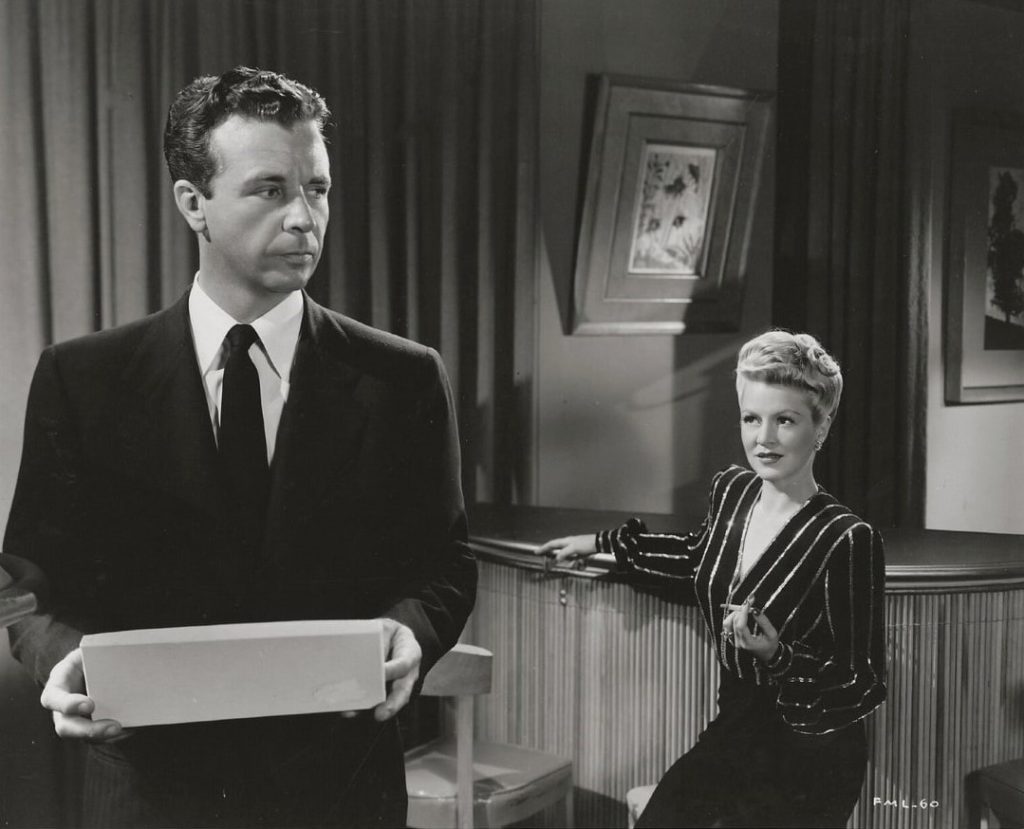
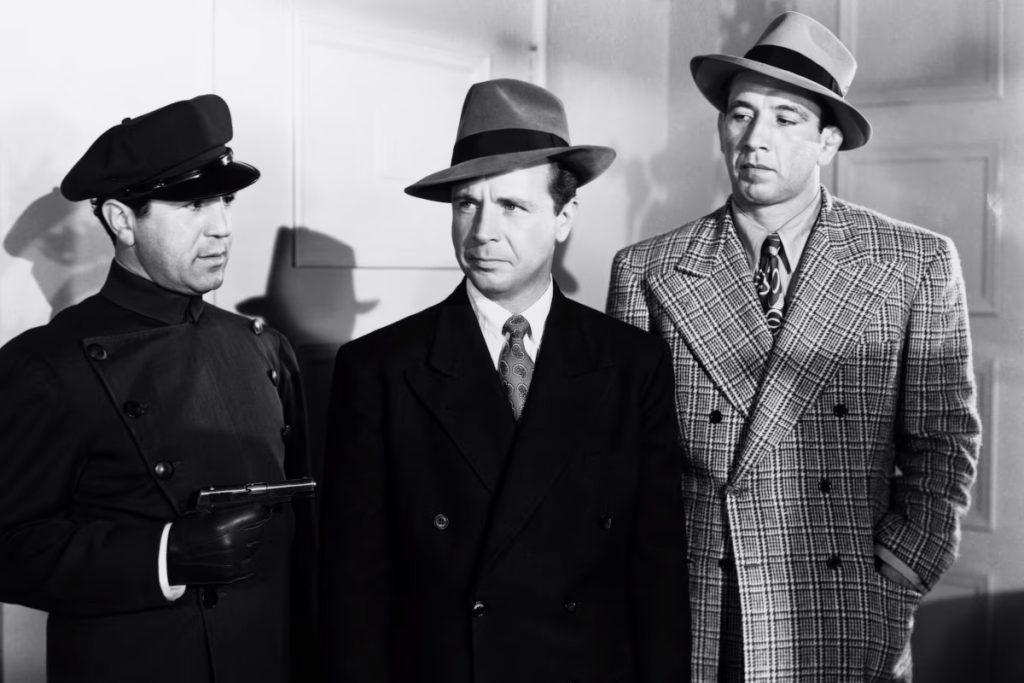
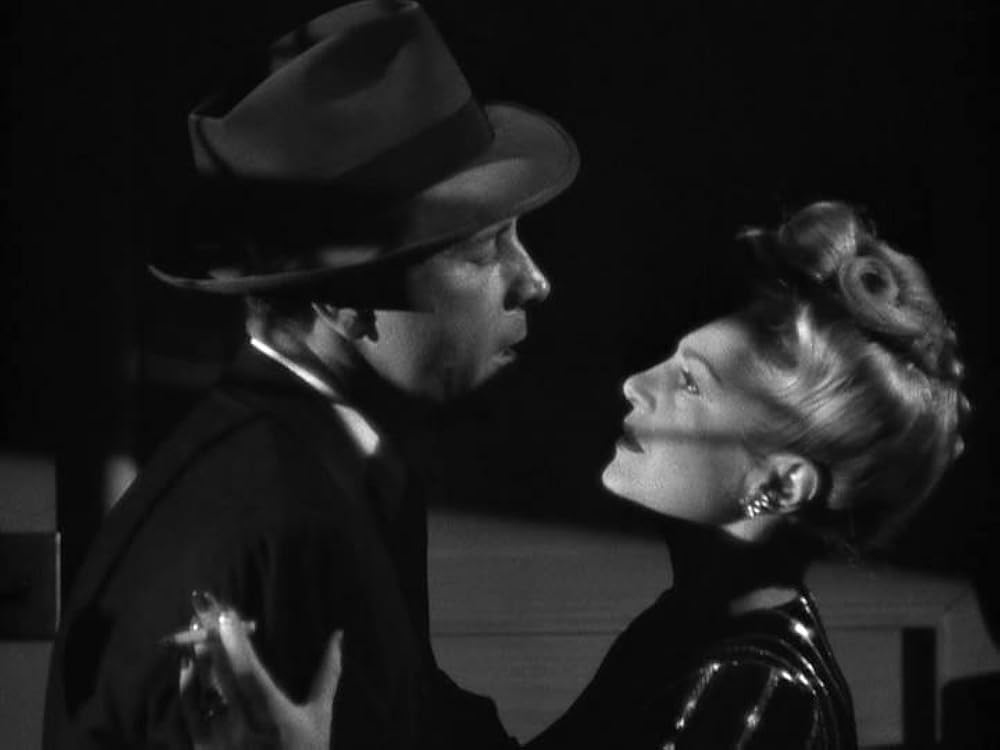
Murder, My Sweet (1944)
Film / RKO Radio Pictures / USA
Based on Farewell, My Lovely
Director: Edward Dmytryk
Marlowe Actor: Dick Powell
Principal Cast: Claire Trevor; Anne Shirley; Mike Mazurki
Screenwriter: John Paxton
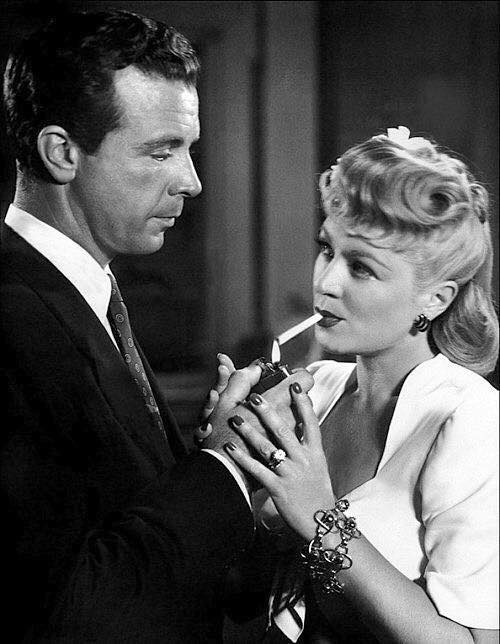
Dick Powell, previously Hollywood’s golden boy of light musicals, shocked audiences with a performance of genuine grit as Marlowe. He played against Claire Trevor’s dangerous femme fatale Helen Grayle. The film uses dream sequences and expressionist lighting, which would become classic film noir techniques. The original title change was pure studio pragmatism: producers feared that audiences seeing Powell’s name next to the word “Lovely” would assume it was another one of his breezy song-and-dance pictures and stay home. It was remade in 1975 under its original title.
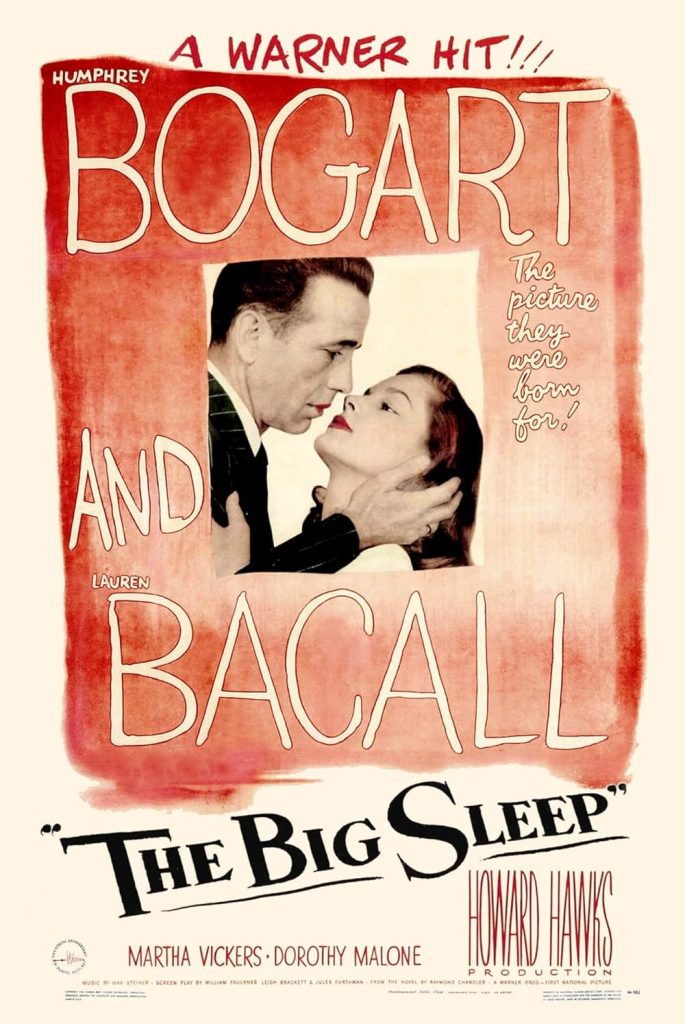
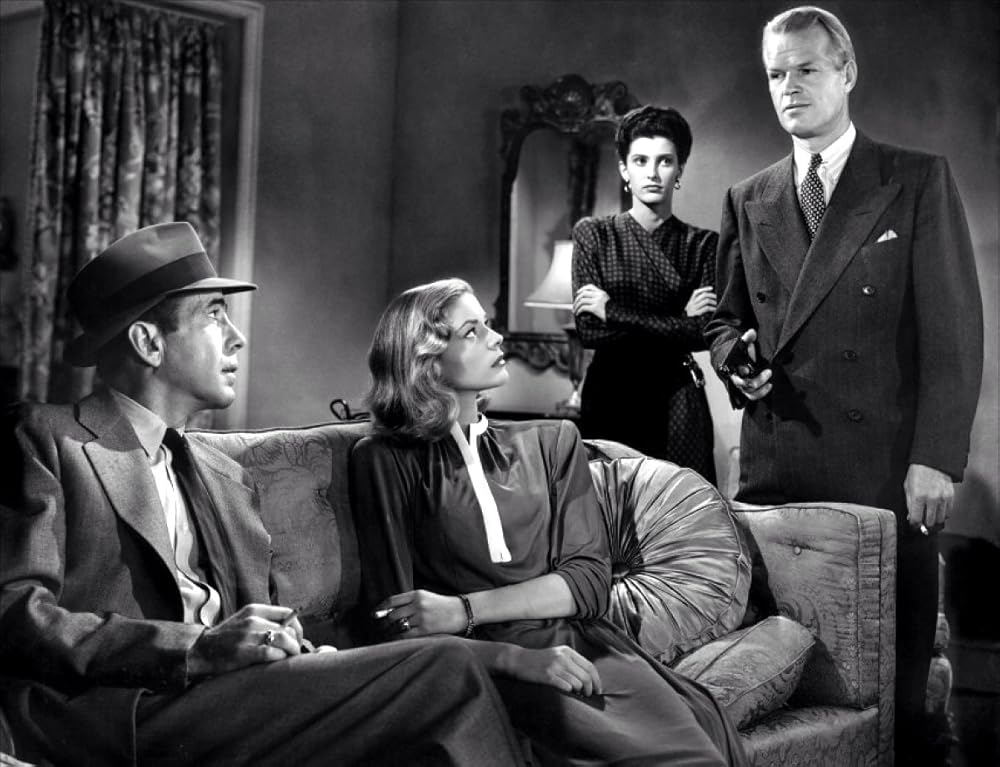
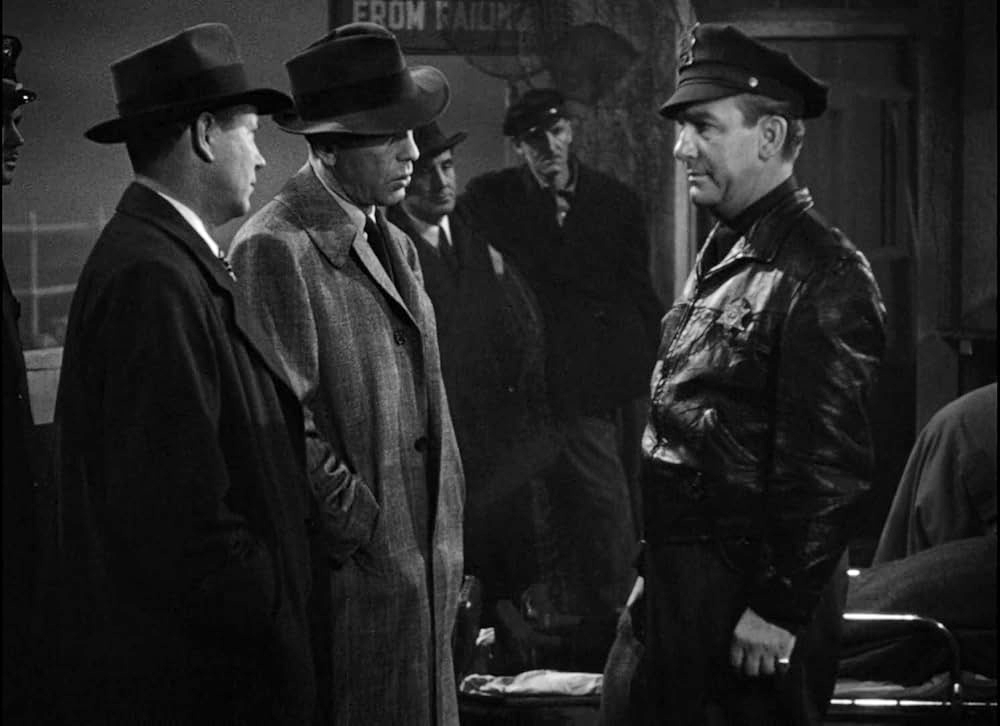
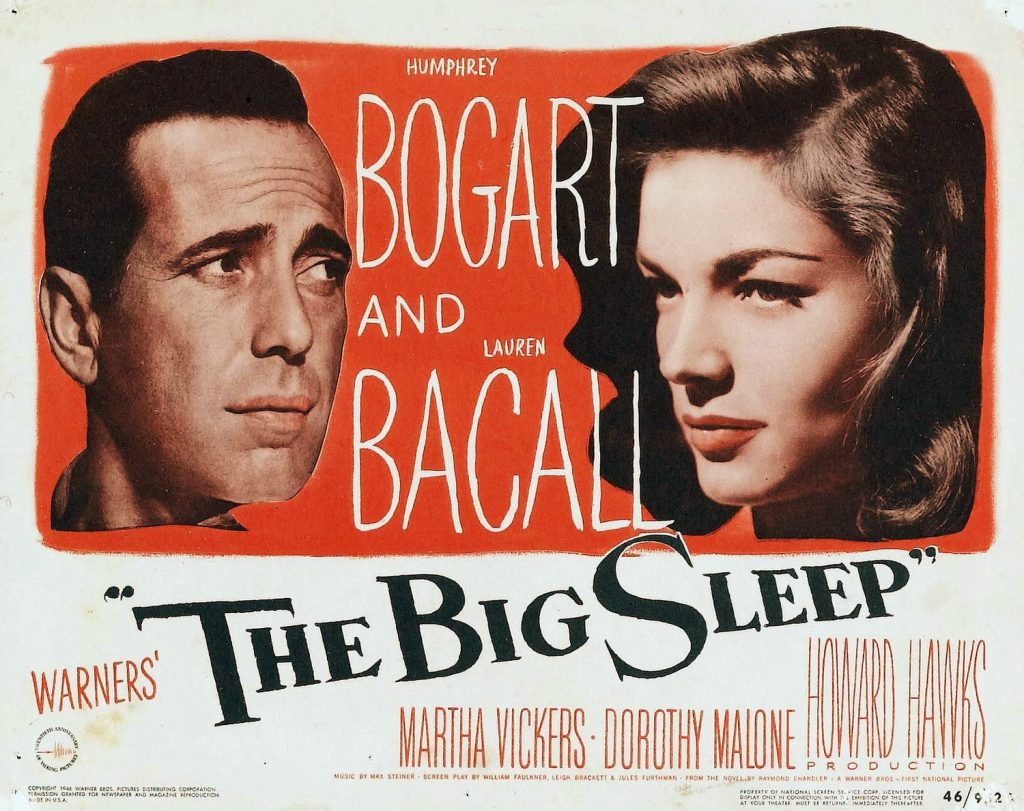
The Big Sleep (1946)
Film / Warner Bros / USA
Based on The Big Sleep
Director: Howard Hawks
Marlowe Actor: Humphrey Bogart
Principal Cast: Lauren Bacall; Martha Vickers; Elisha Cook Jr.
Screenwriters: William Faulkner; Leigh Brackett; Jules Furthman
Howard Hawks’s adaptation is the gold standard of film noir: Humphrey Bogart as Marlowe, Lauren Bacall as the mysterious Vivian Rutledge, their second outing together, after To Have and Have Not. The plot is so tangled that when Hawks wired Chandler to ask who killed the chauffeur, the author admitted he had no idea. Hays Code censors forced the filmmakers to bury the novel’s seedier content in metaphor but the dialogue between Bogie and Bacall about horse racing required little translation. Screenwriters included William Faulkner. It was remade in 1978 with Robert Mitchum.
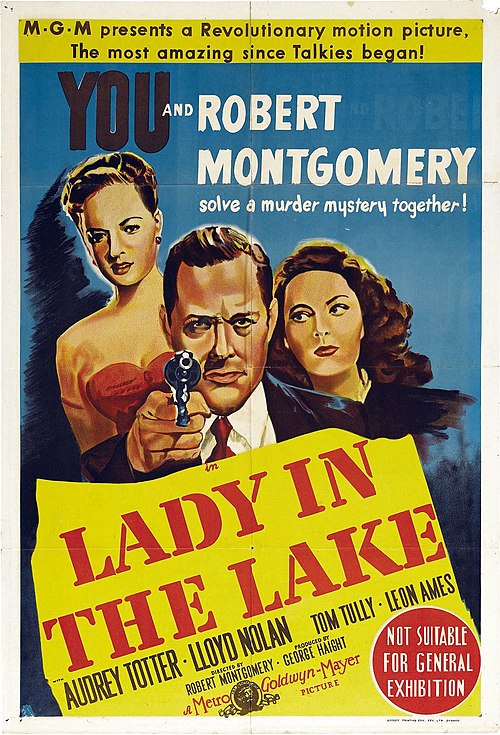
Lady in the Lake (1947)
Film / Metro‑Goldwyn‑Mayer / USA
Based on Lady in the Lake
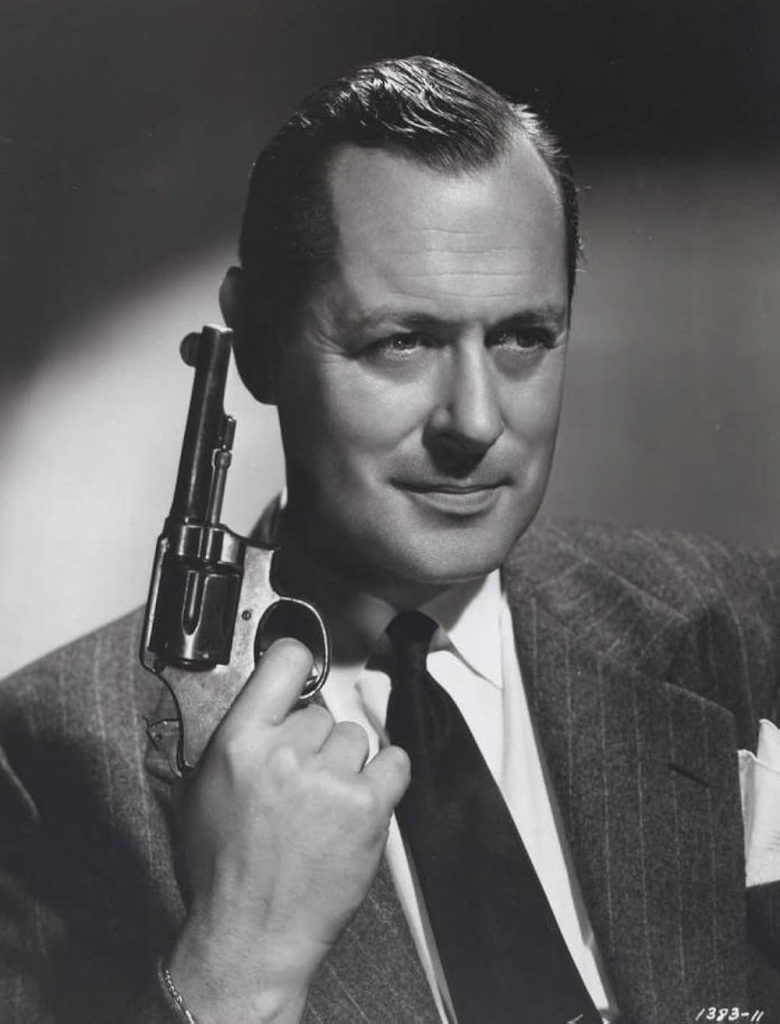
Director: Robert Montgomery
Marlowe Actor: Robert Montgomery
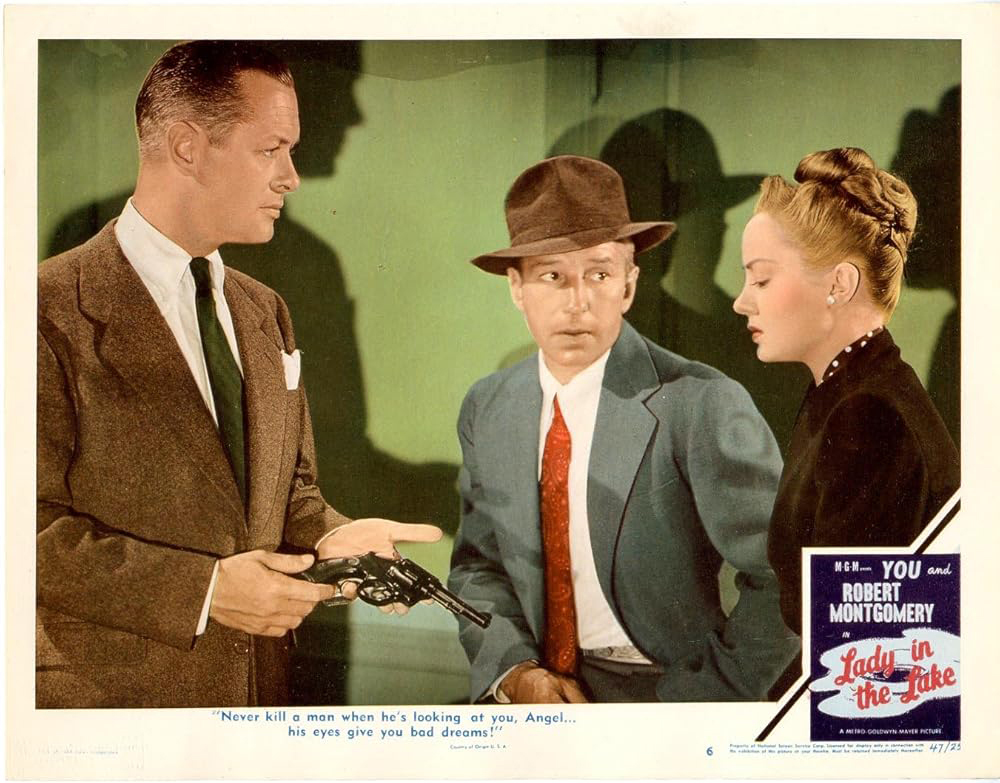
Principal Cast: Audrey Totter; Lloyd Nolan; Tom Tully
Screenwriter: Steve Fisher
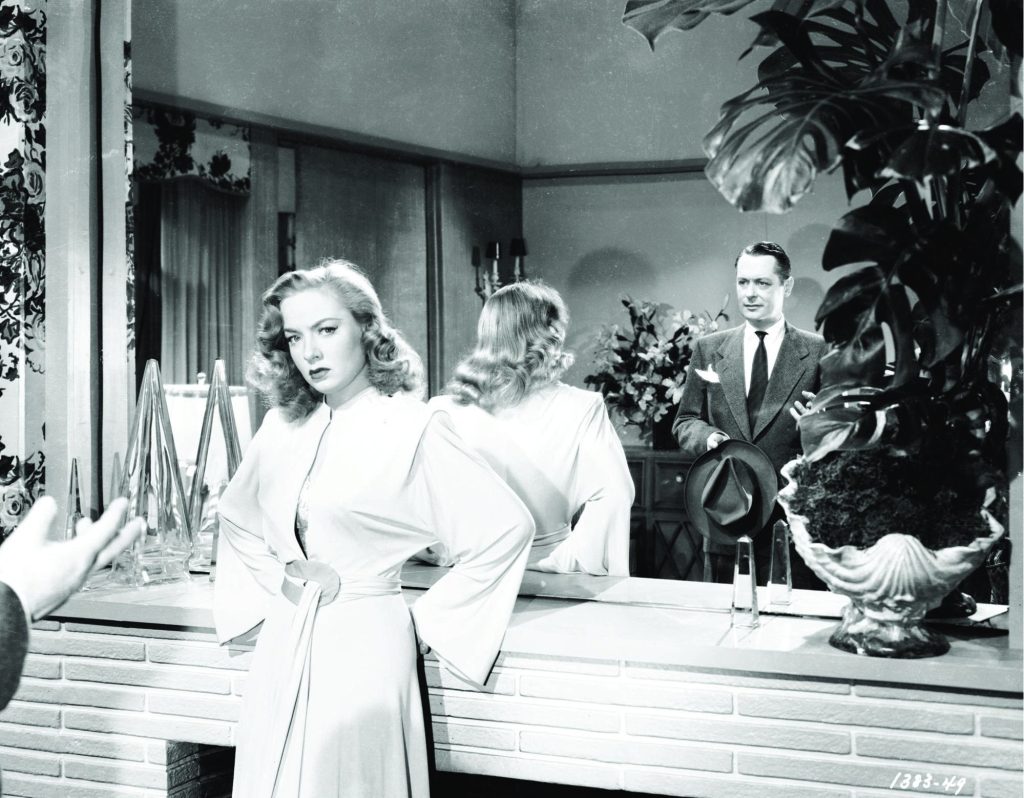
A ground-breaking and daring film, Lady in the Lake was shot almost entirely from the detective’s point of view: the camera is his eyes, and audiences see only what he sees. Marlowe himself appears on screen only briefly, via his reflection in a mirror, and in moments where he addresses us directly to narrate. Audrey Totter plays the sharp-edged Adrienne Fromsett opposite this disembodied detective. The experiment divided opinion sharply. Critics admired the ambition but found it cold in practice: performing into a camera lens in place of a human face produced a stiffness that no ingenuity could overcome.
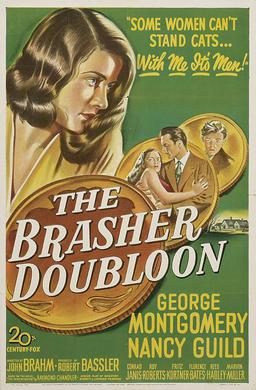
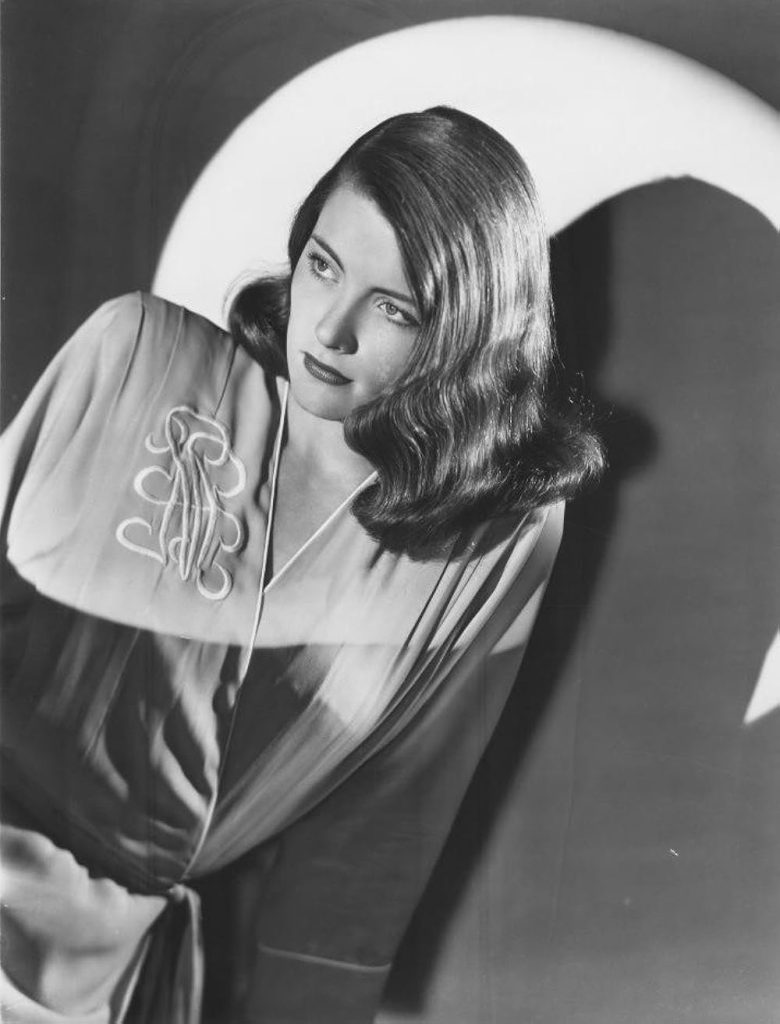
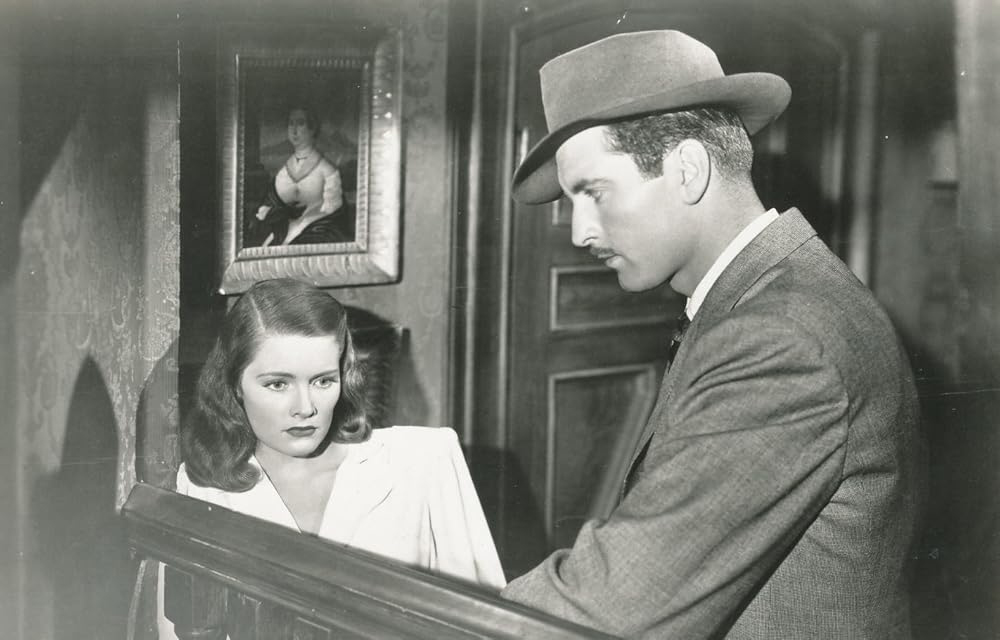
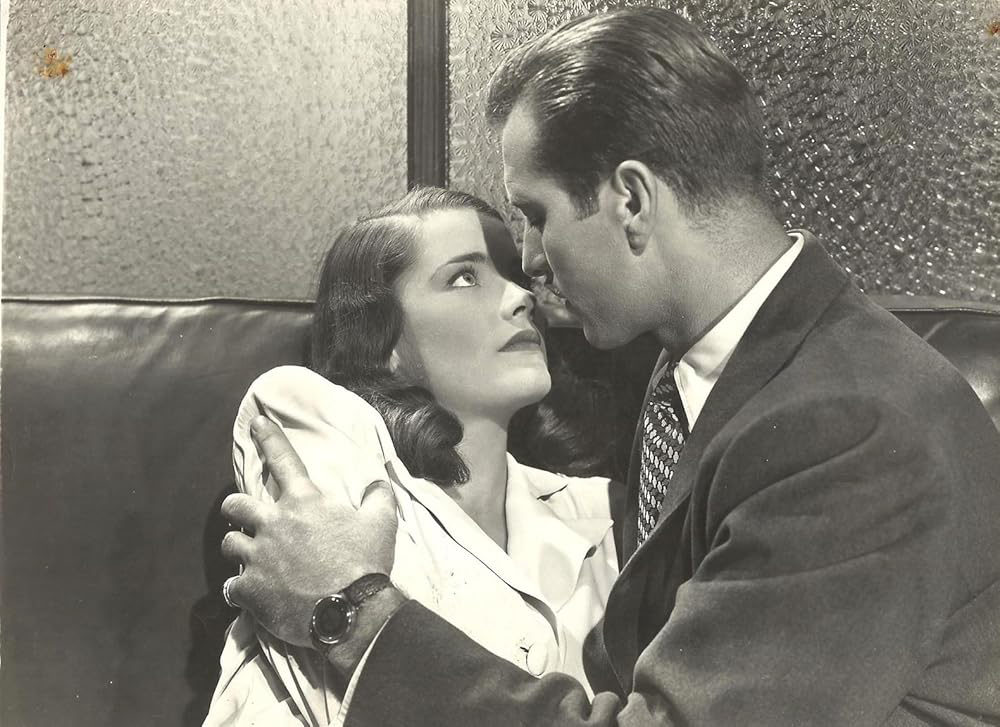
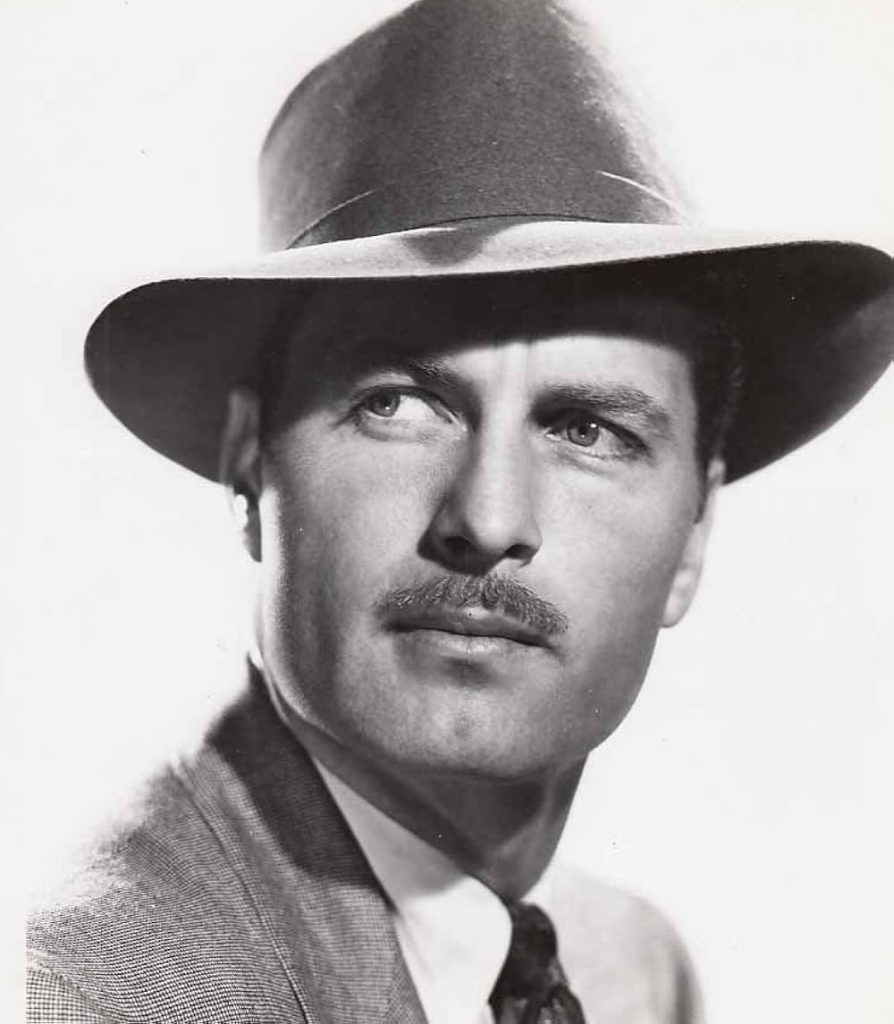
The Brasher Doubloon (1947)
Film / 20th Century Fox / USA
Based on The High Window
Director: John Brahm
Marlowe Actor: George Montgomery
Principal Cast: Nancy Guild; Conrad Janis; Fritz Kortner
Screenwriter: Dorothy Bennett; Leonard Praskins
The most faithful of the classic adaptations, following The High Window’s plot of a priceless coin and dangerous secrets with careful attention. George Montgomery played Marlowe opposite Nancy Guild as the brittle secretary Merle Davis. However faithful to the text, Montgomery’s Marlowe was deemed too clean and square-jawed for the cynical Marlowe. The New York Times called the adaptation “pedestrian.” A 1942 predecessor, Time to Kill, had quietly replaced Marlowe with the popular detective Michael Shayne altogether.
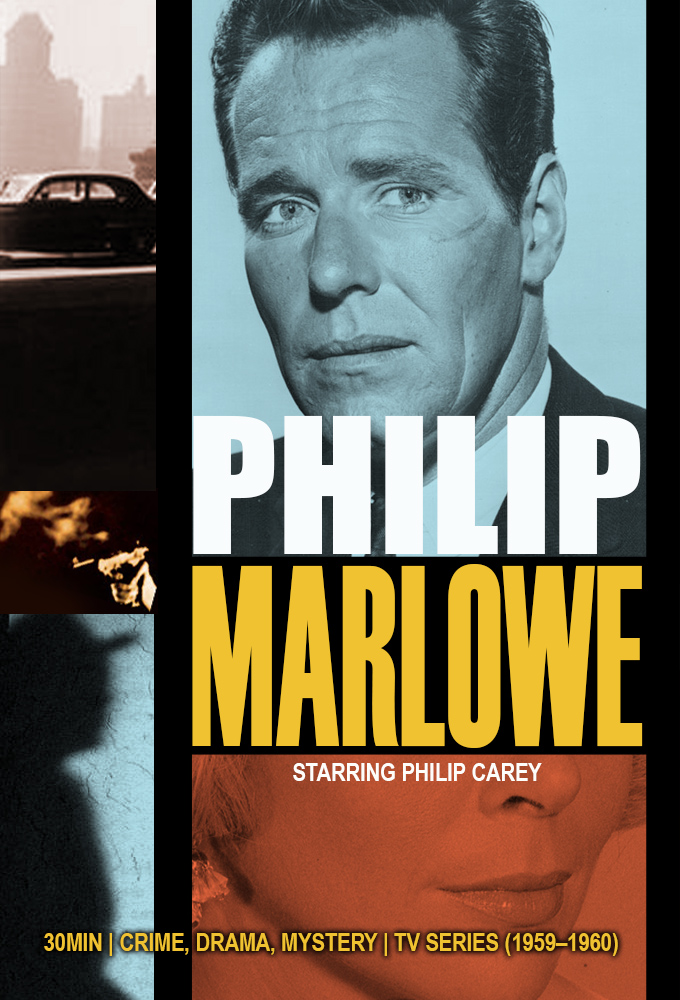
Philip Marlowe (1959)
TV Film Pilot / ABC / USA
Based on The Little Sister
Director: Robert Ellis Miller
Marlowe Actor: Philip Carey
Principal Cast: William Schallert; Parley Baer
Screenwriter: Philip MacDonald
Television’s first attempt at Philip Marlowe ran for 26 episodes on ABC from October 1959 to March 1960. Philip Carey, a veteran of westerns and B-pictures, was watchable, sporting a scar on one cheek. The show ran one season. Its failure was put down to its similarity to every other detective series of the era. Chandler never saw a single episode. He had died six months before it aired. But the show did spawn a Marlowe board game.
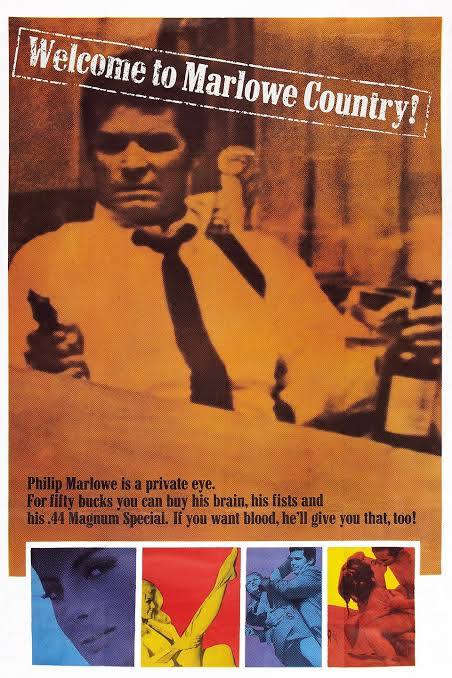
Marlowe (1969)
Film / Metro-Goldwyn-Mayer / USA
Based on The Little Sister
Director: Paul Bogart
Marlowe Actor: James Garner
Principal Cast: Gayle Hunnicutt; Carroll O’Connor; Bruce Lee
Screenwriter: Stirling Silliphant
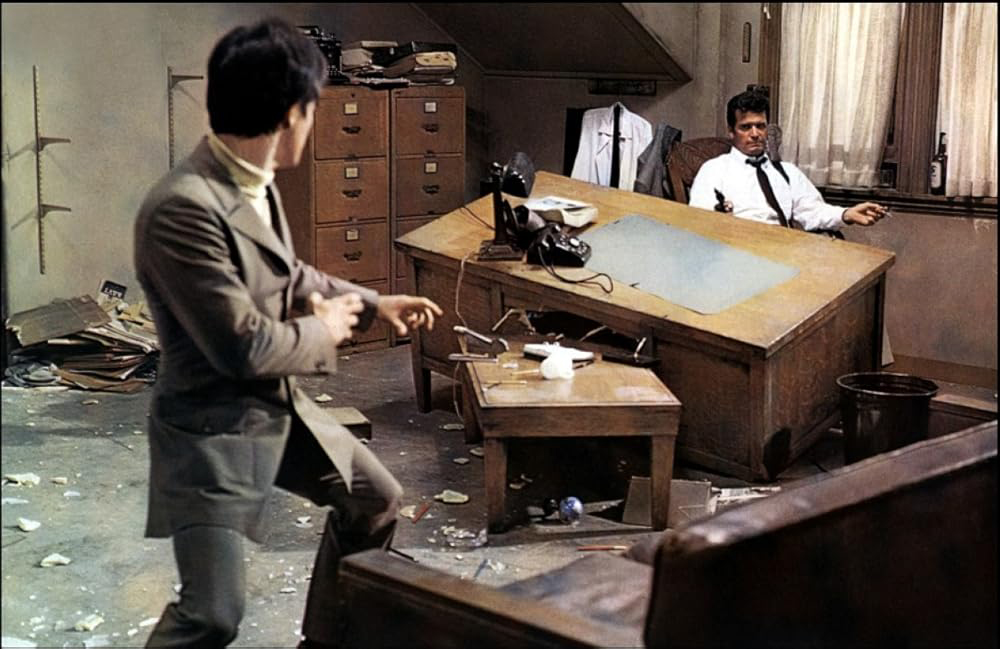
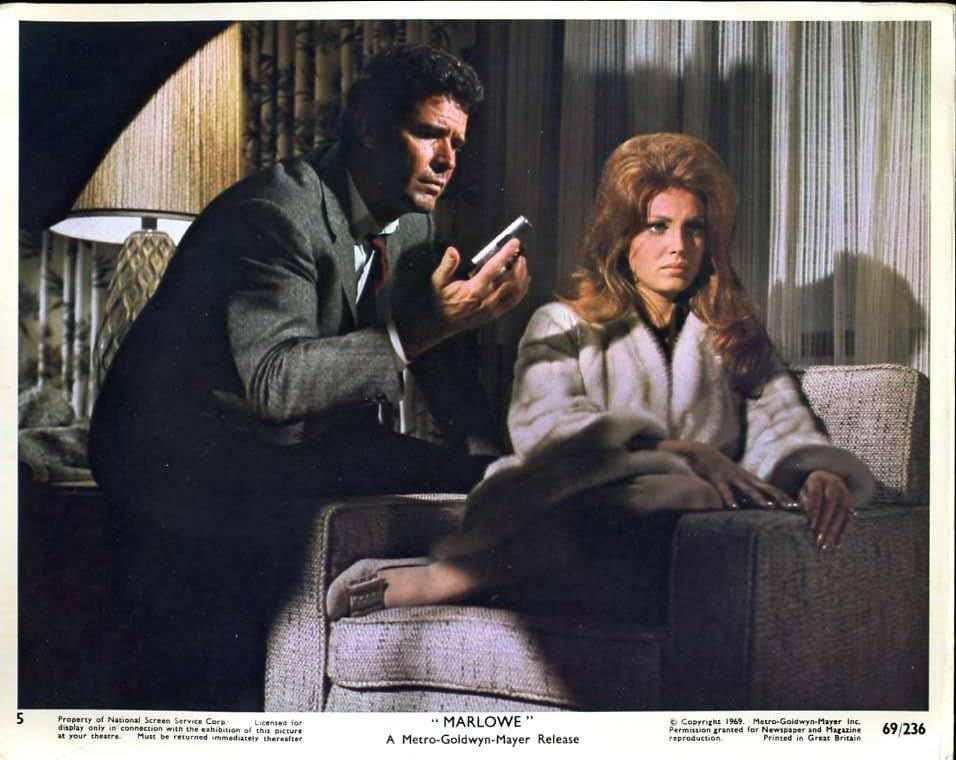
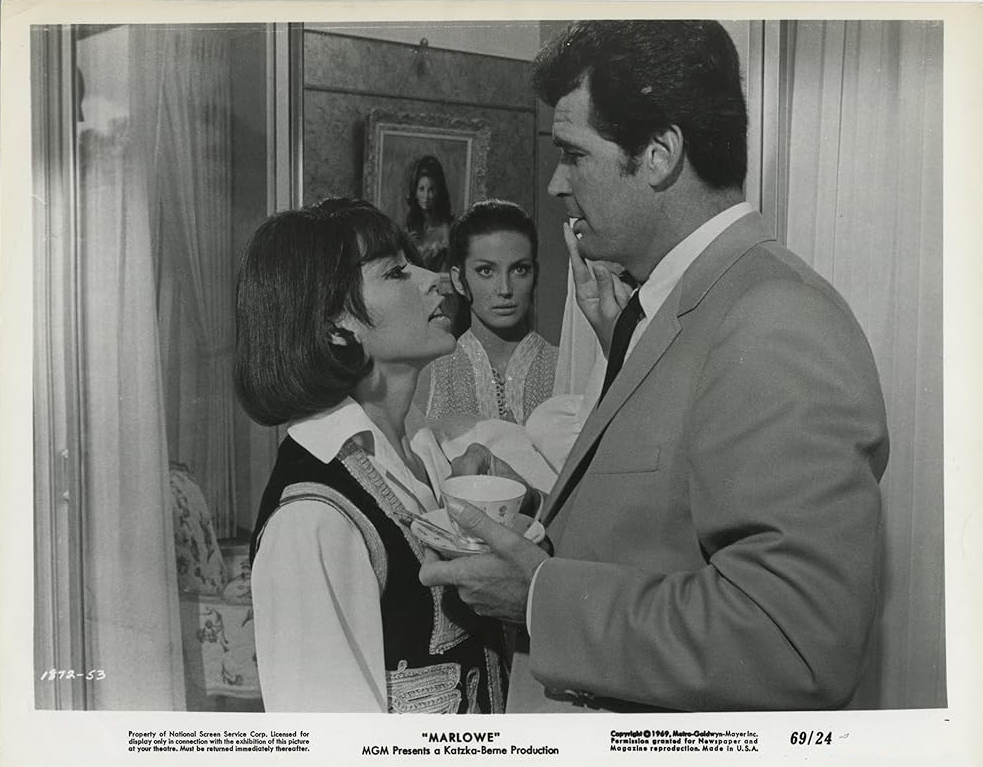
James Garner brought a warmer, self-deprecating quality to Marlowe than audiences had seen before, navigating a Los Angeles that had grown stranger since the classic noir era. Gayle Hunnicutt played glamorous actress Mavis Wald opposite him. The film is best remembered today for a single scene with Bruce Lee. In one of his earliest American roles, he plays a mob enforcer who dismantles Marlowe’s entire office with his hands and feet.
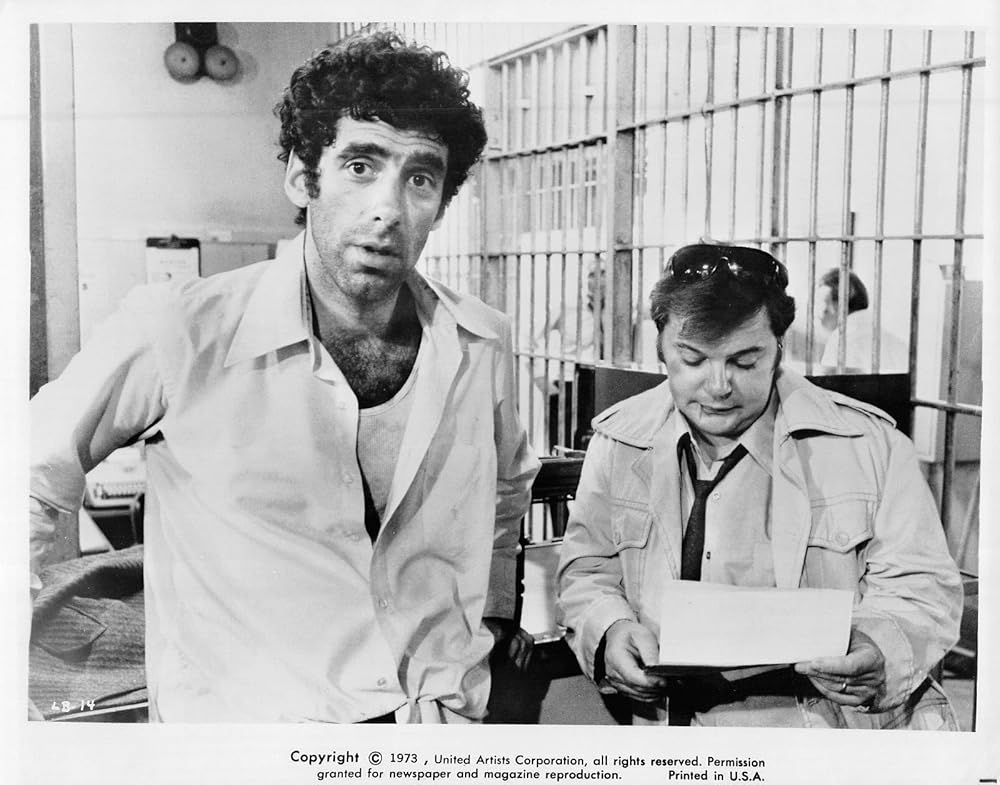
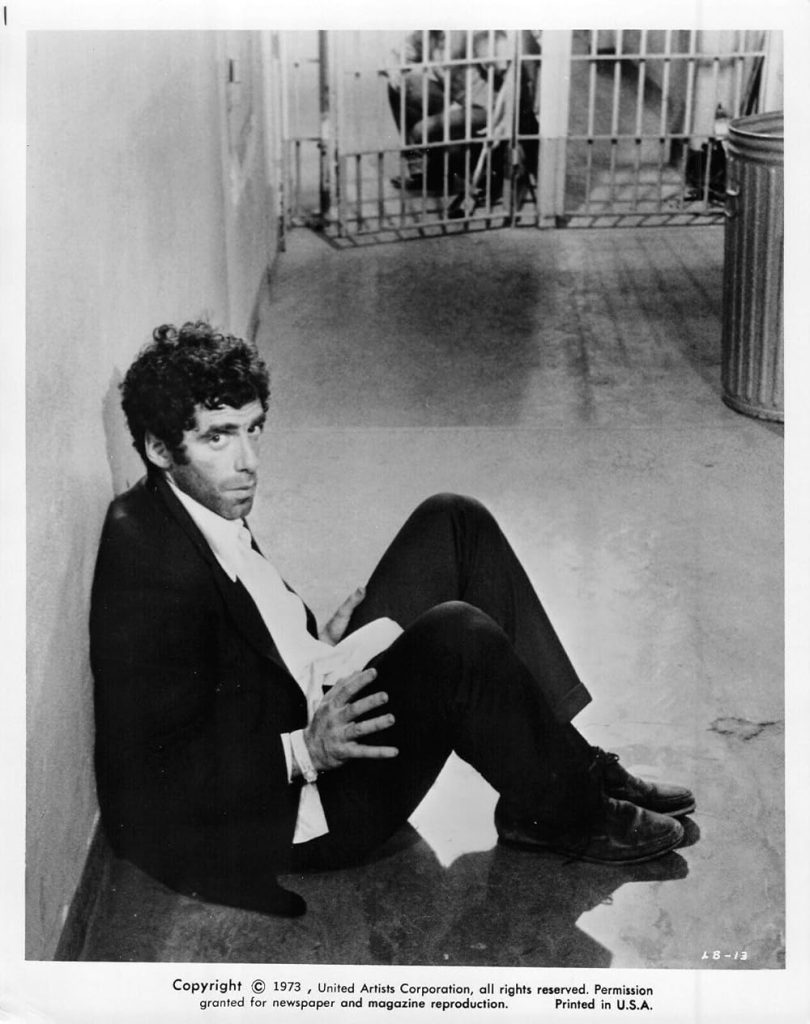
The Long Goodbye (1973)
Film / United Artists / USA
Based on The Long Goodbye
Director: Robert Altman
Marlowe Actor: Elliott Gould
Principal Cast: Nina van Pallandt; Sterling Hayden; Mark Rydell; Arnold Schwarzenegger
Screenwriter: Leigh Brackett
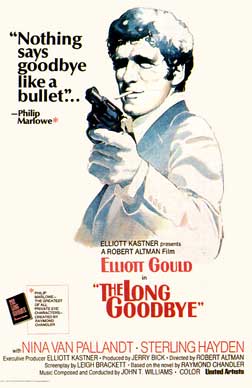
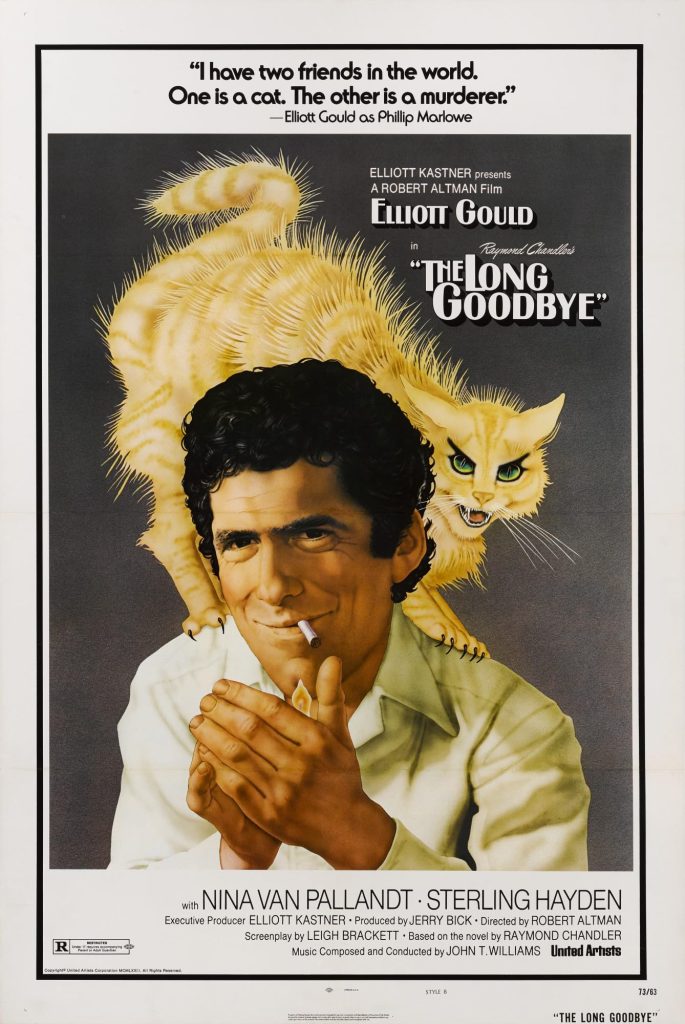
Robert Altman’s sun-bleached, satirical adaptation sees Elliott Gould as Marlowe, a mumbling, chain-smoking man out of his own time. He’s a 1950s detective adrift in the self-absorbed Los Angeles of the 1970s: the only man still wearing a suit and tie while everyone around him dresses in the flowing shirts and sandals of the era. Nina van Pallandt plays Eileen Wade at the story’s troubled centre. A young, entirely silent Arnold Schwarzenegger can be spotted among the mob henchmen. Altman’s central question was whether a man of Marlowe’s code of honour could survive in an era that had abandoned those values entirely. It has come to be one of the most acclaimed Chandler films.
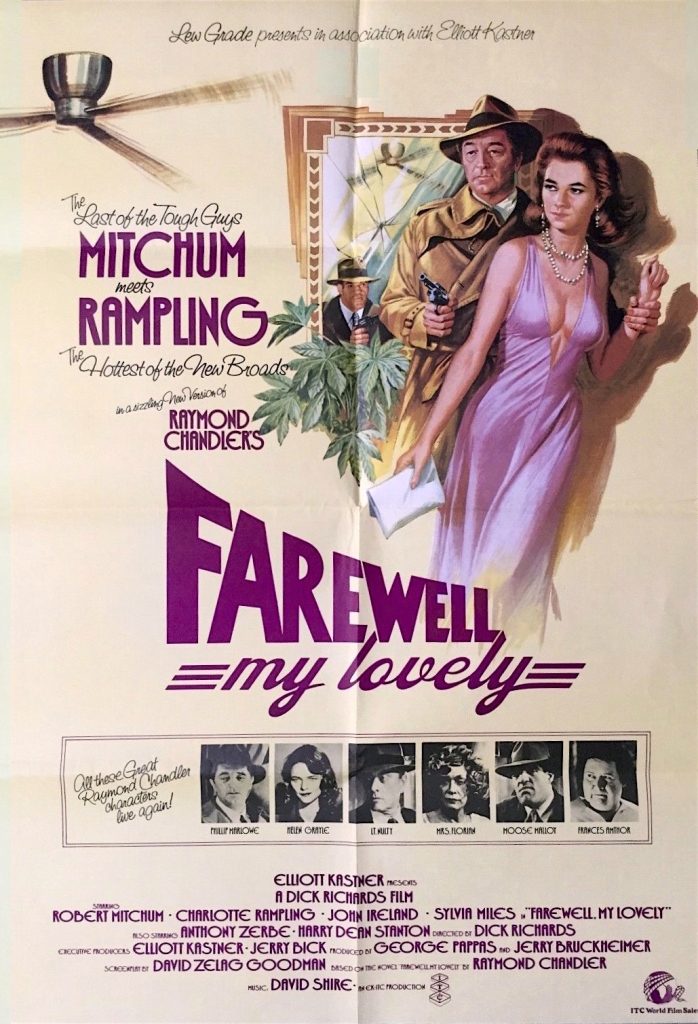
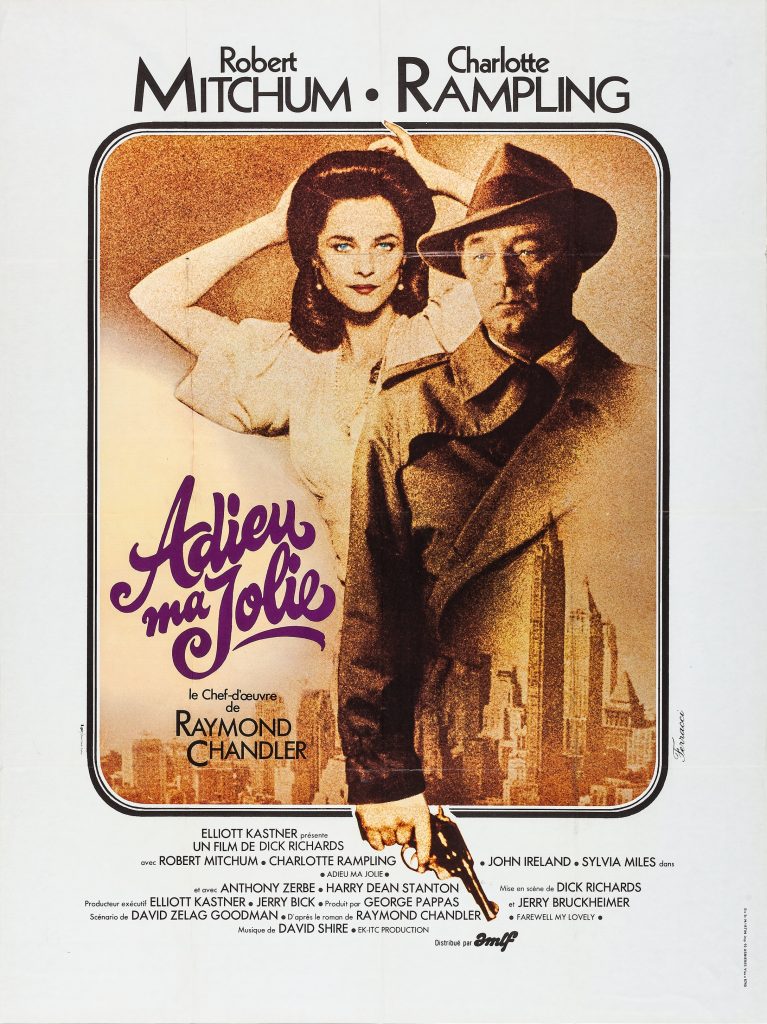
Farewell, My Lovely (1975)
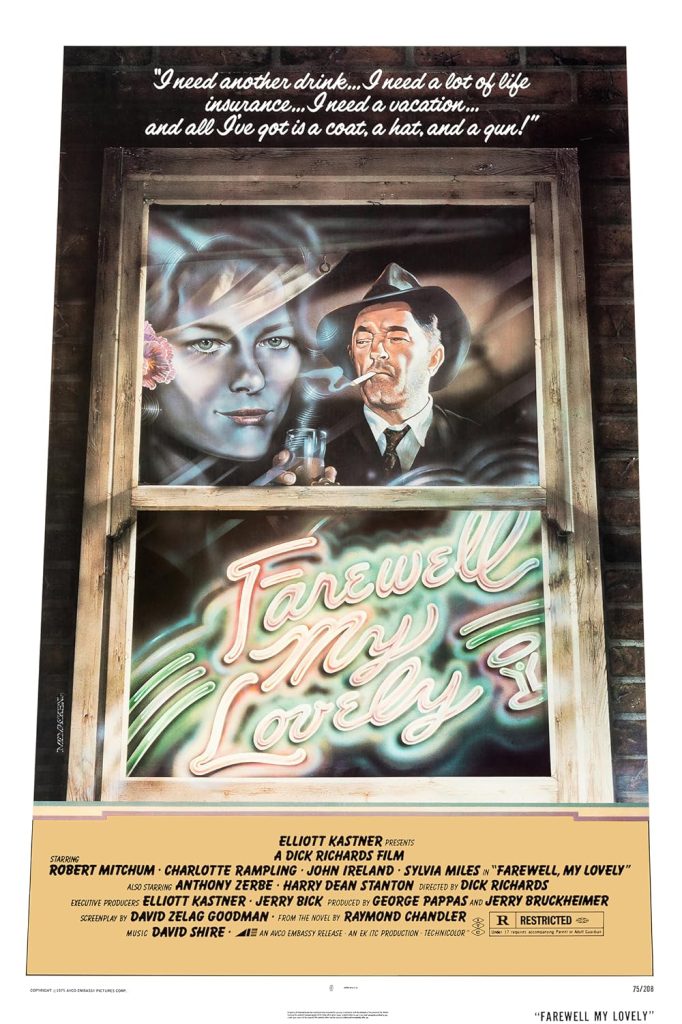
Film / AVCO Embassy / USA
Based on Farewell, My Lovely
Director: Dick Richards
Marlowe Actor: Robert Mitchum
Principal Cast: Charlotte Rampling; John Ireland; Sylvia Miles
Screenwriter: David Zelag Goodman
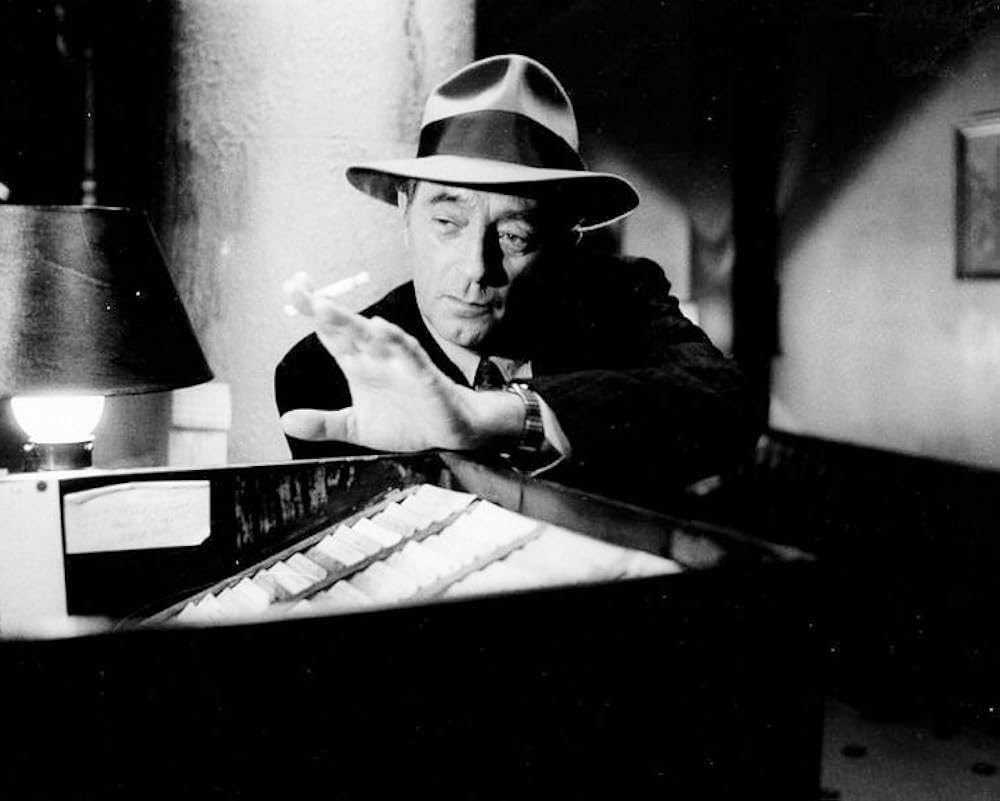
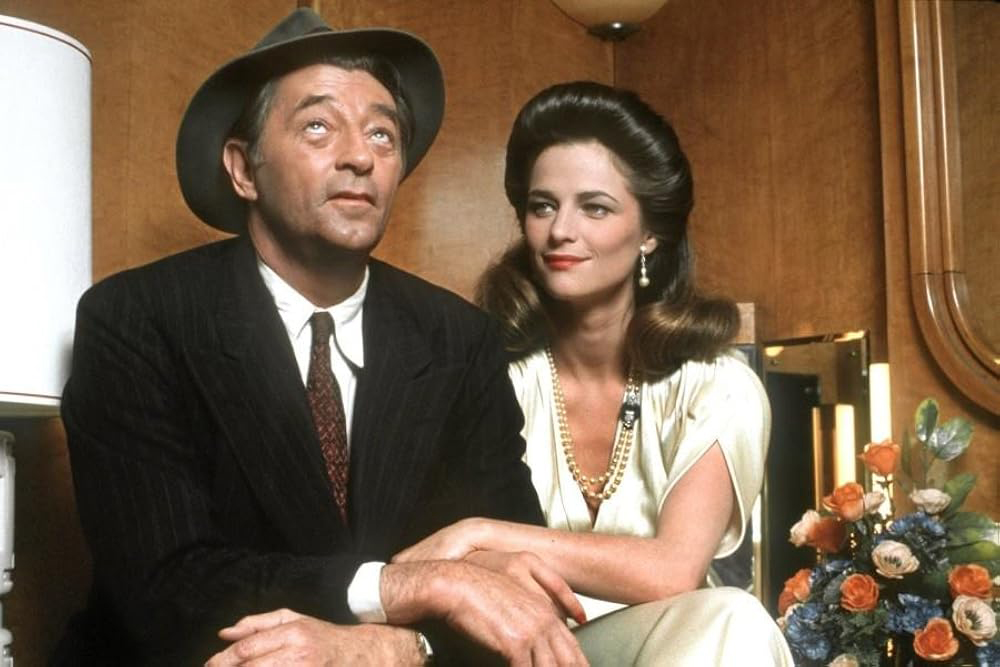
Robert Mitchum was 57 when he took on Marlowe -high-mileage, and looking it. Could he be the tightly-coiled detective of the original? Roger Ebert gave it four out of four stars, writing that Mitchum was “born to play the weary, cynical, doggedly romantic Marlowe.” Cinematographer John Alonzo, fresh from Chinatown, shot the film as though it were the 1940s: no zooms, no helicopter shots. Mitchum’s pinstripe suit had originally been made for actor Victor Mature. Charlotte Rampling played Helen Grayle. Crime novelist Jim Thompson appeared in his only screen role as her husband. Sylvia Miles received an Academy Award nomination for Best Supporting Actress for eight minutes on screen as a boozy former showgirl.
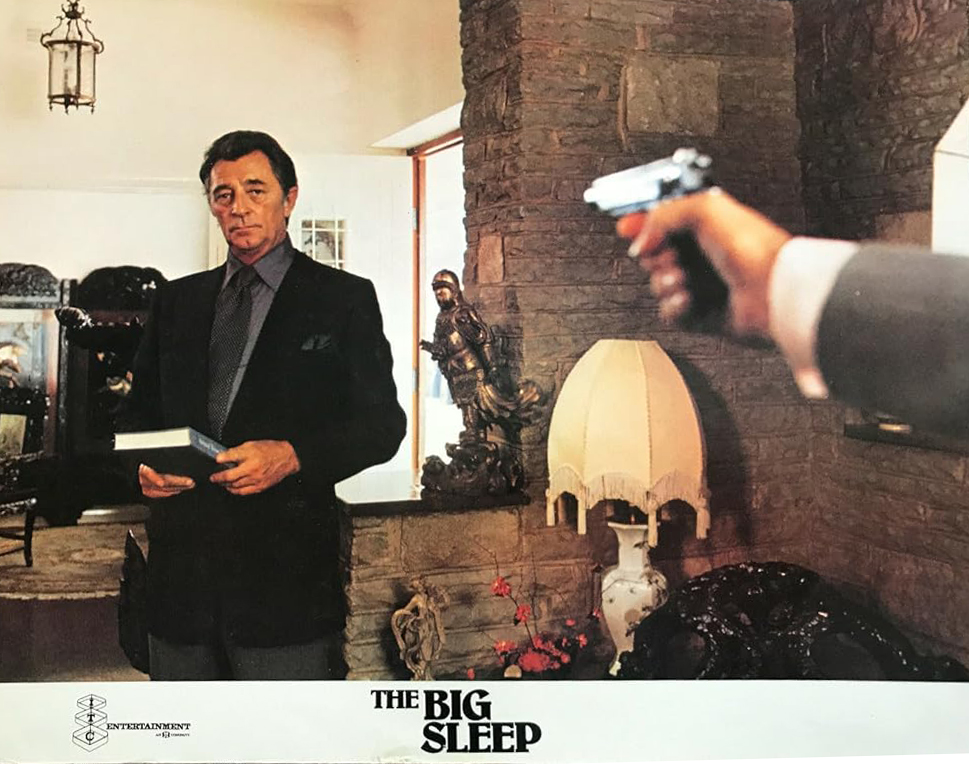
The Big Sleep (1978)
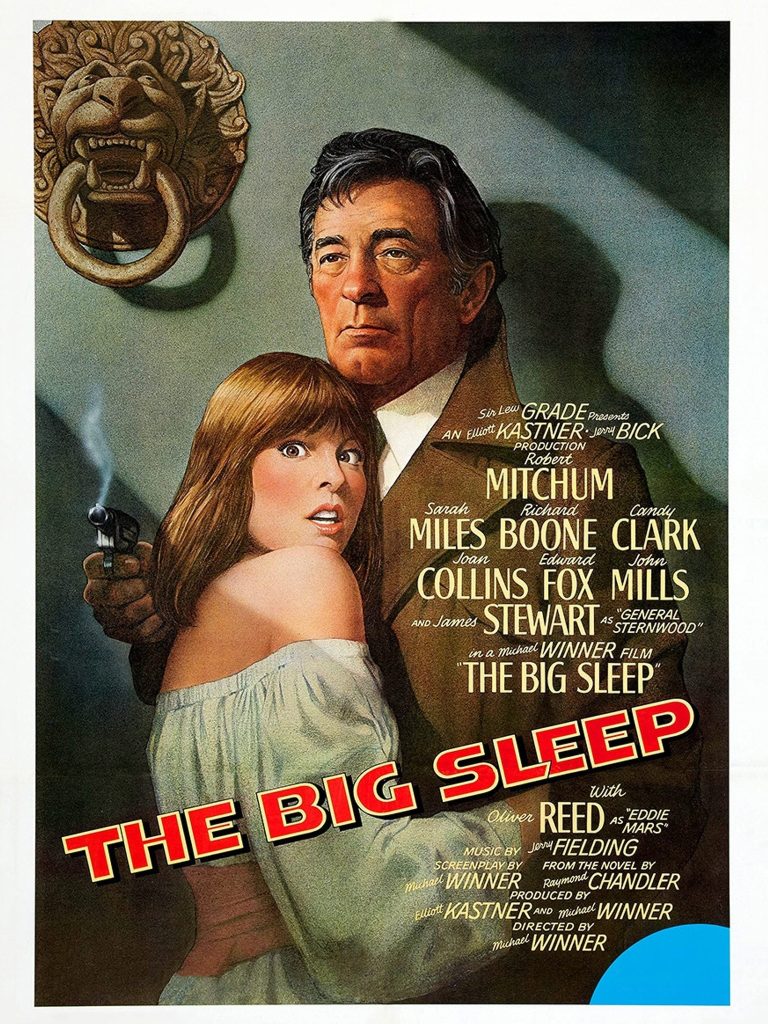
Film / ITC Entertainment / UK/USA
Based on The Big Sleep
Director: Michael Winner
Marlowe Actor: Robert Mitchum
Principal Cast: Sarah Miles; Richard Boone; Oliver Reed
Screenwriter: Michael Winner; Gerry O’Hara
Relocating The Big Sleep from 1940s Los Angeles to 1970s London was always a gamble, and British director Michael Winner lost it. The film contained material the 1946 version could only hint at -drug addiction, pornography, nudity. The cast was stellar: James Stewart as General Sternwood, with roles for Oliver Reed, Joan Collins and John Mills. However, it didn’t work. Mitchum watched the visibly frail Stewart on set and remarked: “The picture was all about corpses, but Jimmy looked deader than any of them.” The New York Times, noting the substitution of grimy Los Angeles for a London of green lawns and sunshine, found “the best Mr. Mitchum can do, figuratively speaking, is to play croquet.”
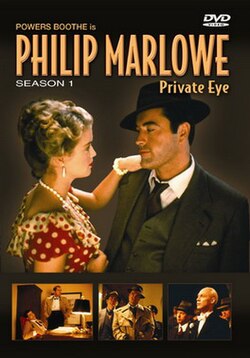
Philip Marlowe, Private Eye (1983)
TV Series / HBO / USA
Based on various Chandler stories
Director: Various
Marlowe Actor: Powers Boothe
Principal Cast: Kathryn Leigh Scott; William Katt
Screenwriter: Various
HBO’s first ever original drama series was Philip Marlowe. Powers Boothe played Marlowe across two short runs, from 1983 to 1986, with storylines drawn from Chandler’s earlier short stories rather than the novels, keeping the show firmly in 1930s Los Angeles. Boothe, who had just won an Emmy for his portrayal of cult leader Jim Jones in Guyana Tragedy (1980), brought a combination of physical menace and wounded dignity to the role. Many devotees consider him the most faithful Marlowe ever put on screen.
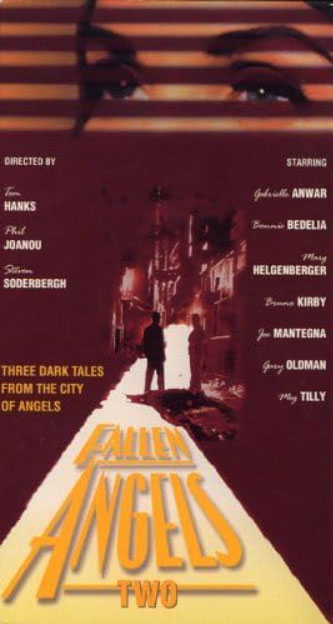
Fallen Angels Two (1993)
TV Series / Showtime / USA
Based on Red Wind
Director: Agnieszka Holland
Marlowe Actor: Danny Glover
Principal Cast: Kelly Lynch; Dan Hedaya
Screenwriter: Alan Trustman
Fallen Angels was a Showtime anthology series running from 1993 to 1995, adapting hard-boiled short stories by Chandler, Hammett, Jim Thompson and others, with a directors’ roster that included Steven Soderbergh, Alfonso Cuarón and Tom Hanks. Tom Hanks directed the Chandler episode I’ll Be Waiting, appearing himself briefly as a goateed villain. Danny Glover received an Emmy nomination for the second season’s Chandler adaptation Red Wind, in which Marlowe was recast as a Black man navigating 1940s Los Angeles.
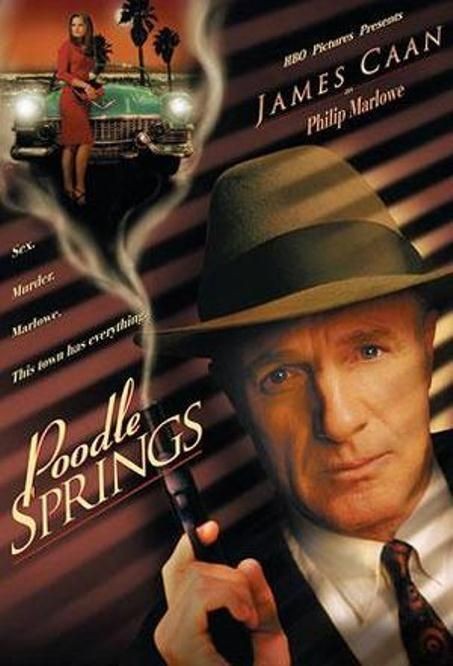
Poodle Springs (1998)
TV Film / HBO / USA
Based on Poodle Springs (Chandler / Robert B. Parker)
Director: Bob Rafelson
Marlowe Actor: James Caan
Principal Cast: Dina Meyer; David Keith; Joe Don Baker
Screenwriter: Tom Stoppard
Chandler’s unfinished final novel, completed by Robert B. Parker and published in 1989, was adapted by Tom Stoppard for HBO and set in 1963, four years after Chandler’s death. James Caan played a grey-haired Marlowe newly married to a wealthy wife and reluctantly transplanted to the desert resort of Poodle Springs -the mocking name Chandler gave to Palm Springs. It was, according to Time Out, “satisfyingly opaque”, drawing on those Chandler staples of dirty pictures, spoiled rich girls and philandering husbands.
Marlowe (2007)
TV Film / BBC / UK
Based on Marlowe character only
Director: Rob Bowman
Marlowe Actor: Jason O’Mara
Screenwriter: Greg Pruss; Carol Wolper
An ABC pilot that set Marlowe in contemporary Los Angeles, with Irish actor Jason O’Mara in the lead. The modern setting divided opinion. Purists felt a Marlowe without the 1940s backdrop lost something essential -but O’Mara’s performance was praised as convincing. The series was never commissioned, but the pilot served its purpose. Producer David E. Kelley saw it and cast O’Mara as the lead in Life on Mars, the American remake of the hit BBC series.
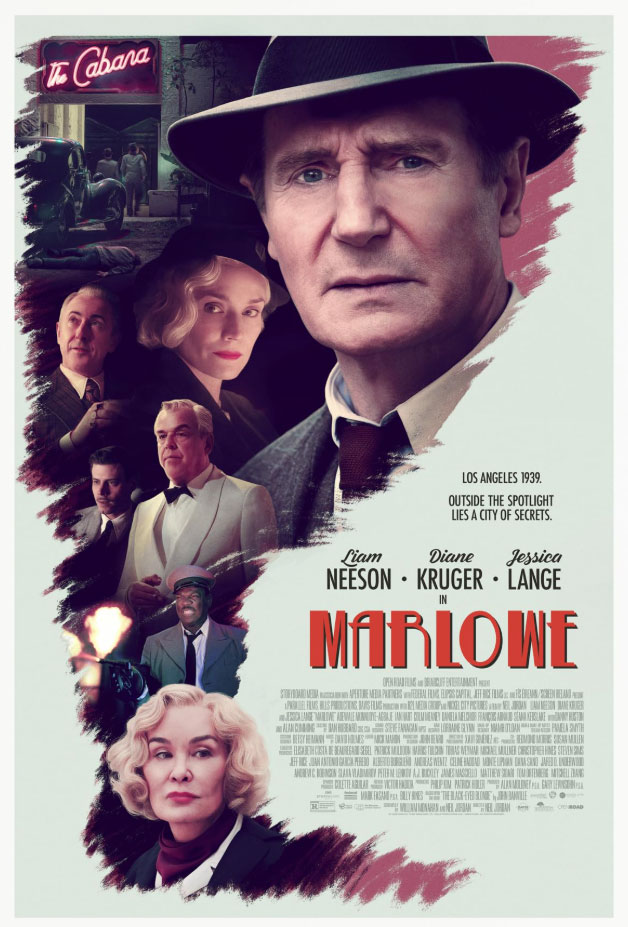
Marlowe (2022)
Film / Parallel Films; Open Road Films / Ireland; Spain; France
Based on The Black‑Eyed Blonde (Benjamin Black)
Director: Neil Jordan
Marlowe Actor: Liam Neeson
Principal Cast: Diane Kruger; Jessica Lange; Danny Huston
Screenwriter: William Monahan
Neil Jordan’s Marlowe, adapted from John Banville’s authorised continuation novel The Black-Eyed Blonde, set Liam Neeson’s Marlowe in 1939 Los Angeles, with Diane Kruger as the femme fatale and Jessica Lange as her mother, a faded Hollywood actress. Neeson, at nearly 70, was the oldest actor ever to play the role. The production looked the part: skilled character actors chewing 1930s scenery, chain-smoking, liberal pours of afternoon whiskey. Neeson was praised for approaching each fight scene with the precision of a chess player. The Chicago Sun-Times praised its “juicy script” and “vigorous performances.” It made $6.2 million at the box office.
CHANDLER AS SCREENWRITER
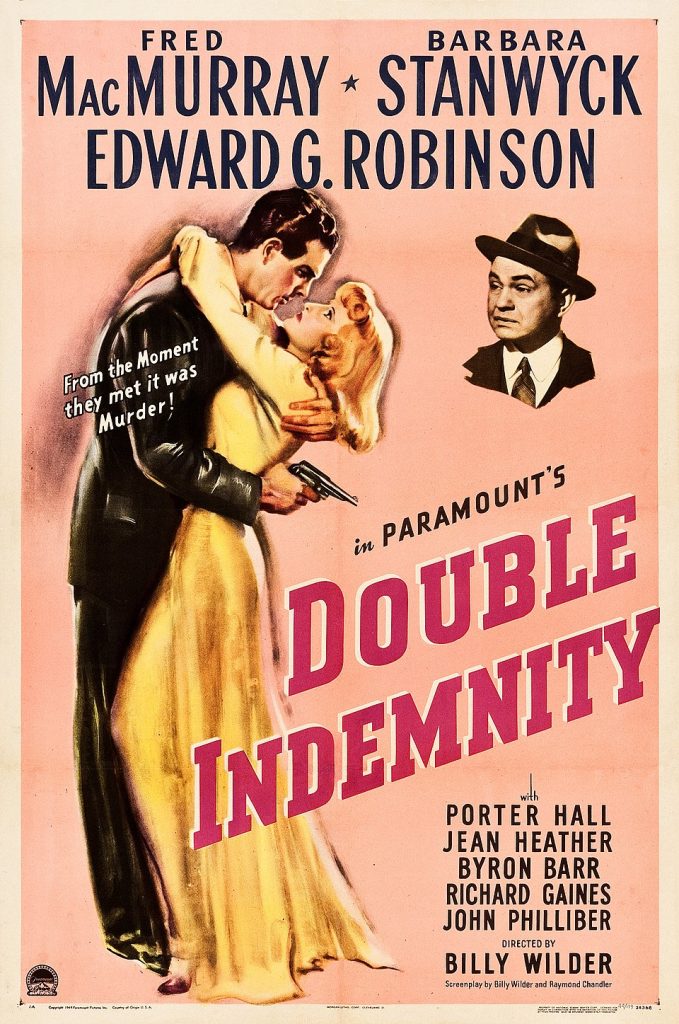
Double Indemnity (1944)
Film / Produced
Director: Billy Wilder
Principal Cast: Fred MacMurray; Barbara Stanwyck; Edward G. Robinson
Chandler’s Role: Co-screenwriter (with Billy Wilder)
Source Material: Novel by James M. Cain
Hollywood wanted Chandler almost as soon as his novels appeared, though the relationship was never a comfortable one. He and Billy Wilder co-wrote Double Indemnity based on James M. Cain’s novel. Wilder later acknowledged that the dialogue which makes the film so memorable was largely Chandler’s work. They clashed constantly but the friction produced something extraordinary and earned an Academy Award nomination.
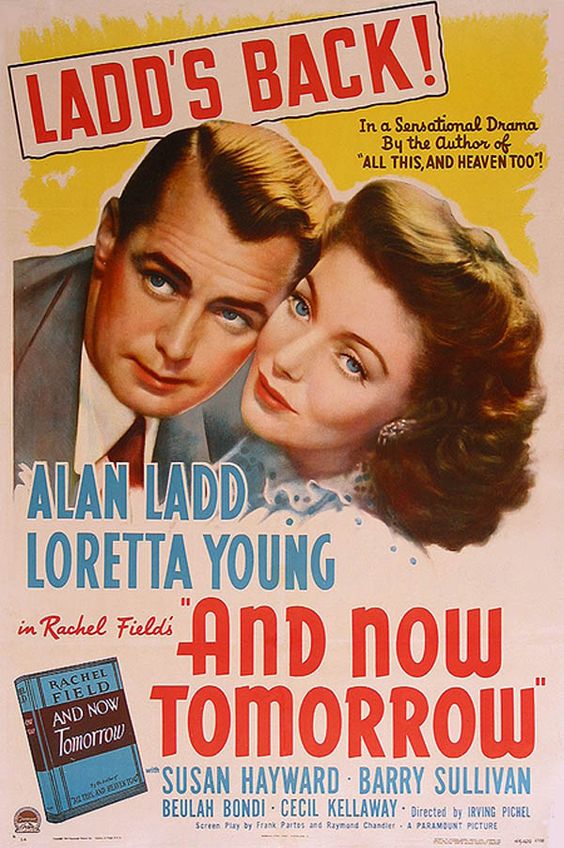
And Now Tomorrow (1944)
Film / Produced (uncredited work)
Director: Irving Pichel
Principal Cast: Alan Ladd; Loretta Young; Barry Sullivan
Chandler’s Role: Dialogue revisions (uncredited)
Source Material: Novel by Rachel Field
Chandler reportedly worked as a script doctor on dialogue during his early Paramount contract.
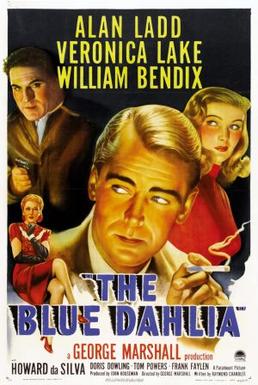
The Blue Dahlia (1946)
Film / Produced
Director: George Marshall
Principal Cast: Alan Ladd; Veronica Lake; William Bendix
Chandler’s Role: Original screenplay
Source Material: Original story
Chandler’s only produced original screenplay starred Alan Ladd as a returning war veteran wrongly accused of murdering his unfaithful wife, opposite Veronica Lake, and earned Chandler an Academy Award nomination. The behind-the-scenes story is the stuff of Hollywood legend: blocked and unable to finish the script’s climax, Chandler told producer John Houseman he could only complete it drunk. Houseman agreed. His requirements included two Cadillac limousines on standby night and day, six secretaries working in shifts for dictation and typing, and a direct line to the studio at all times. Nurses administered vitamin injections throughout, as Chandler was barely eating. He delivered the script on time.
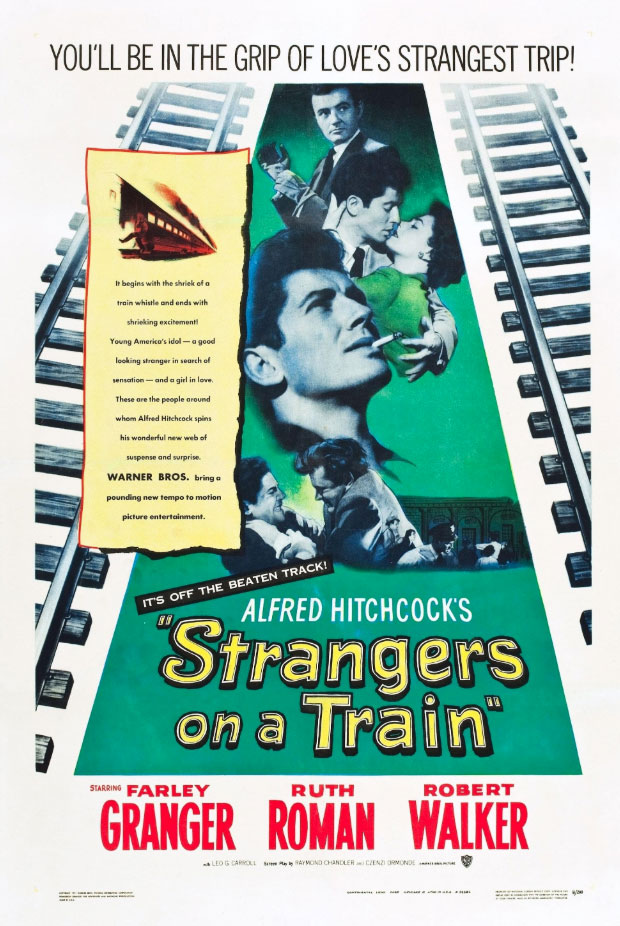
Strangers on a Train (1951)
Film / Produced (rewritten)
Director: Alfred Hitchcock
Principal Cast: Farley Granger; Ruth Roman; Robert Walker
Chandler’s Role: Early screenplay drafts
Source Material: Novel by Patricia Highsmith
His final Hollywood credit was equally turbulent. Chandler collaborated on Strangers on a Train for Alfred Hitchcock, a film he privately thought was implausible. He and Hitchcock stopped speaking after Hitchcock heard Chandler had called him “that fat bastard.” Hitchcock made a show of throwing Chandler’s draft screenplays into the studio trash — but Chandler kept the lead writing credit regardless. He never worked in Hollywood again.
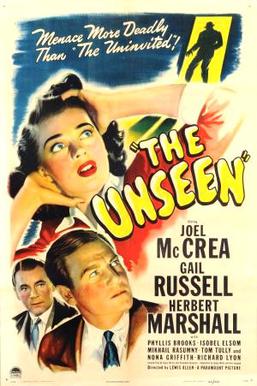
The Unseen (1945)
Film / Possible uncredited work
Director: Lewis Allen
Principal Cast: Joel McCrea; Gail Russell; Herbert Marshall
Chandler’s Role: Story consultation / possible dialogue work
Source Material: Based on novel ‘Midnight House’ by Ethel Lina White
Some film historians believe Chandler contributed minor script work during his Paramount period.
CHANDLER’S UNPRODUCED WORK
Playback – adaptation attempt (1950s)
Film / Unproduced
Chandler’s Role: Screenplay development
Source Material: Based on Chandler novel Playback
Chandler explored adapting the novel himself before publication.
The Long Goodbye – early attempt adaptation (1950s)
Film / Unproduced
Chandler’s Role: Screenplay development
Source Material: Based on Chandler novel The Long Goodbye
Chandler discussed film adaptation possibilities while the novel was being written.
Red Wind – early attempt (1940s)
Film / Unproduced
Chandler’s Role: Story treatment
Source Material: Based on Chandler short story Red Wind
One of several Marlowe stories considered for Hollywood adaptation during his studio contract.
Paramount detective film treatments (1940s)
Film / Unproduced
Chandler’s Role: Story treatments
Source Material: Original concepts
Chandler submitted several detective story ideas to Paramount that were never developed.